
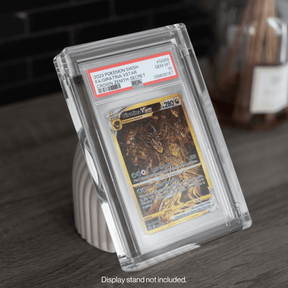
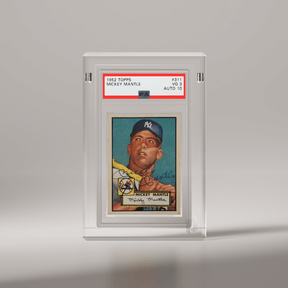
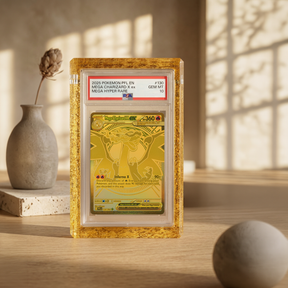
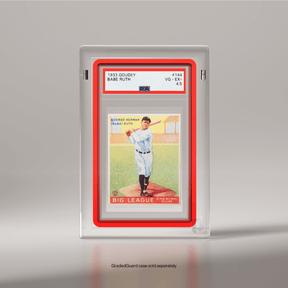






A PSA 9 Base Set Charizard might sell for thousands less than a PSA 10 of the same card. That massive price gap often comes down to factors most collectors never learn about, microscopic centering measurements, era-specific surface standards, and corner wear patterns that PSA evaluators scrutinize under magnification. After watching thousands of submissions come back with unexpected grades, we've decoded the hidden criteria that separate the 9s from the 10s.
PSA has authenticated and graded over 80 million collectibles using their systematic approach, but their public grading standards only tell half the story. The real grading happens in the details most collectors never consider. For those new to the grading process, our complete beginner's guide to PSA grading covers the foundational concepts before diving into these advanced evaluation factors.
What Makes PSA's Grading Scale More Complex Than the Basic 1-10 Definitions?
PSA uses a 10-point grading scale to assess the quality and condition of trading cards, but the actual evaluation process involves dozens of sub-criteria that determine where your card lands within each grade. PSA evaluators examine four primary areas, centering, corners, edges, and surface, with different weight given to each factor depending on the card's age, rarity, and manufacturing era.
The published grading standards represent minimum thresholds, not comprehensive evaluation criteria. A PSA 9 requires "mint condition with only very minor flaws," but what constitutes "very minor" varies dramatically between vintage and modern cards. Modern cards face stricter surface quality standards because current printing technology eliminates most manufacturing defects that were common in earlier decades.
PSA evaluators also apply card-specific knowledge during grading. They know that certain vintage cards commonly have slight print line issues that don't automatically disqualify a PSA 10, while the same print lines on modern cards would likely cap the grade at PSA 9. This institutional knowledge accumulated over millions of submissions creates an unwritten grading framework that goes far beyond the basic scale definitions.
The grading process also considers authentication markers invisible to most collectors. PSA evaluators examine paper stock, ink saturation, and printing registration to verify authenticity, and these same characteristics influence grade assignment. A card might meet all condition requirements for PSA 10 but receive a lower grade due to subtle printing irregularities that suggest reprinting or counterfeiting attempts.
What Hidden Grading Factors Does PSA Really Look For?
PSA evaluators examine dozens of micro-factors beyond the four main categories, including print quality consistency, color registration accuracy, surface texture uniformity, and handling evidence like finger oils or sleeve marks. These secondary factors often determine the difference between adjacent grades when primary factors are borderline.
Print quality represents one of the most overlooked evaluation areas. PSA examines ink density, color bleeding, and registration alignment with different standards for different eras. A vintage card with slight color misregistration might maintain PSA 10 potential, while modern cards require near-perfect print alignment for the highest grades. This reflects PSA's adaptation to evolving printing technology standards.
Surface texture analysis reveals handling history invisible to casual examination. PSA evaluators can distinguish between factory printing texture and post-production surface changes caused by touching, cleaning, or environmental exposure. Cards that appear pristine under normal lighting might show handling evidence under professional examination conditions.
Authentication markers embedded in the evaluation process create additional grading complexity. PSA simultaneously verifies legitimacy while assessing condition, and these processes overlap in ways that affect final grades. Cards with unusual paper characteristics or printing variations might receive conservative grades even without obvious condition issues.
Microscopic edge analysis extends beyond simple chipping assessment. PSA evaluators examine cutting patterns, die wear evidence, and edge consistency to distinguish between manufacturing characteristics and post-production damage. This detailed analysis often explains why apparently similar cards receive different grades.
How Do Centering Standards Apply to Modern vs Vintage Cards?
PSA Gem Mint 10 centering tolerance must not exceed approximately 55/45 percent on the front and 75/25 percent on the reverse, but measuring centering accurately requires understanding how PSA evaluators actually apply these standards across different card eras. Vintage cards often receive slightly more centering tolerance due to manufacturing limitations of older printing equipment.
For PSA 10, the front centering cannot exceed the stated tolerances in any direction, meaning if one border measures the maximum allowed percentage, the opposite border must maintain proper proportion. The reverse side allows more variance, recognizing that back centering was less controlled during manufacturing. PSA Mint 9 centering must be approximately 60/40 or better on the front and 90/10 or better on the reverse, giving slightly more tolerance.
Centering standards become progressively more lenient down the scale. PSA NM-MT 8 centering must be approximately 65/35 or better on the front and 90/10 or better on the reverse, while PSA NM 7 centering must be approximately 70/30 or better on the front and 90/10 or better on the back. Notice that reverse centering requirements remain constant at 90/10 from PSA 7 through PSA 9, indicating that back centering issues were historically common.
Modern cards generally face stricter centering enforcement because current printing technology achieves better centering consistency. A modern card with borderline centering would likely cap at PSA 9, while a comparable vintage card might still achieve PSA 10 if all other factors are perfect. This reflects PSA's recognition of technological constraints in older printing processes.
Which Corner and Edge Analysis Details Matter Most During Evaluation?
Corner and edge evaluation involves microscopic examination that reveals handling history and manufacturing quality through wear patterns invisible to naked eye inspection. PSA evaluators use magnification to identify specific types of damage and distinguish between manufacturing characteristics and post-production handling issues.
Corner sharpness standards have tightened significantly for modern cards compared to vintage submissions. Current cards require razor-sharp corners for PSA 10, while older cards with slightly soft corners might still achieve the same grade if the softness appears consistent with period manufacturing rather than handling damage. PSA evaluators recognize the difference between die-cutting limitations and actual corner wear.
Edge chipping evaluation considers both the size and pattern of any imperfections. Manufacturing-related edge roughness receives more tolerance than obvious handling damage, even when the visible impact appears similar. PSA evaluators examine chipping patterns to determine whether they resulted from cutting processes, storage conditions, or active handling during the card's lifetime.
Corner bending patterns reveal specific handling scenarios. Storage-related corner softness from improper long-term storage receives different treatment than sharp creases from gameplay or rough handling. PSA evaluators can distinguish between gradual pressure damage and acute bending incidents based on the wear pattern characteristics.
The interaction between corner and edge condition creates complex grading scenarios where perfect corners might compensate for minor edge issues, or vice versa. These trade-offs reflect PSA's holistic evaluation approach, no single factor determines the final grade, but corner and edge issues carry significant weight in overall assessment.
Protect Your PSA Investment
Your graded cards lose value every day they’re exposed to UV light and handling damage. Phantom Display cases are engineered with premium acrylic and neodymium magnetic closure, purpose-built for PSA slabs. Rated 4.7/5 for quality by collectors.
Shop PSA Display Cases →What Surface Quality Factors Affect Modern vs Vintage Card Grading?
Surface evaluation represents the most subjective aspect of PSA grading, with standards that have evolved dramatically as printing technology improved and collector knowledge increased. Modern cards face near-zero tolerance for surface imperfections because current manufacturing eliminates most defects that were common in earlier production runs.
Print lines create the biggest grading discrepancy between modern and vintage cards. Many vintage sets have inherent print line characteristics that don't prevent PSA 10 grades, while modern cards with visible print lines typically cap at PSA 9. PSA evaluators distinguish between period-appropriate printing artifacts and actual quality control failures.
Scratching patterns reveal whether damage occurred during manufacturing, packaging, or handling. Light scratches from sleeve insertion might not impact vintage card grades significantly, while the same scratches on modern cards could prevent high grades. This reflects changing collector expectations and storage practices over decades.
Holographic foil quality adds another layer to modern card evaluation. Foil scratching, rainbow patterns, and manufacturing inconsistencies in holographic treatments receive scrutiny that didn't exist for earlier card types. These factors can dramatically impact grades on premium modern cards where foil quality represents a primary visual element.
Authenticity markers embedded in surface analysis create additional complexity. PSA evaluators examine surface characteristics to verify legitimacy while assessing condition. Cards with unusual surface properties might receive conservative grades even without obvious defects, as evaluators err on the side of caution when authentication questions arise.
Why Do Cards Get Lower Grades Than Expected?
Pre-submission assessment using proper tools and lighting conditions helps prevent grading disappointments, but collectors commonly miss factors that PSA evaluators catch during professional examination. Understanding these blind spots improves submission success rates significantly.
Centering measurement errors represent the most common pre-submission mistake. Collectors measuring centering by eye rather than precise measurement tools frequently overestimate their cards' centering quality. Professional centering tools or accurate ruler measurements reveal centering issues invisible to casual observation.
Lighting conditions dramatically affect surface defect visibility. Cards that appear flawless under normal room lighting might show obvious scratches, print lines, or handling marks under PSA's professional examination lighting. Examining cards under bright LED lighting or natural sunlight reveals defects that artificial lighting might hide.
Handling evidence accumulates invisibly over time. Finger oils, sleeve insertion marks, and storage pressure create surface changes that appear minor but affect PSA grades. Cards stored in penny sleeves for extended periods might develop texture changes from plastic contact that impact surface grading.
Era-appropriate standards confusion leads to incorrect grade expectations. Collectors applying modern card standards to vintage submissions, or vintage tolerance expectations to modern cards, frequently receive unexpected grades. Understanding era-specific evaluation criteria prevents most submission disappointments.
FAQ
What is the difference between PSA 9 and PSA 10 grading standards?
PSA 10 requires centering that must not exceed approximately 55/45 percent on the front and 75/25 percent on the reverse with no visible flaws under magnification. PSA 9 allows centering of approximately 60/40 or better on the front and 90/10 or better on the reverse, plus very minor flaws such as slight corner softness or microscopic surface imperfections. The difference often comes down to one minor defect that prevents perfection.
How does PSA grade vintage cards differently than modern cards?
PSA applies more lenient surface standards to vintage cards, recognizing manufacturing limitations from earlier printing technology. Print lines, slight color registration issues, and minor edge roughness that would prevent PSA 10 on modern cards might be acceptable on vintage cards. However, centering requirements and major condition issues like creases or stains receive consistent treatment regardless of card age.
What centering requirements does PSA use for different card grades?
PSA centering requirements progress from 55/45 front, 75/25 back for PSA 10, to 60/40 front, 90/10 back for PSA 9, 65/35 front, 90/10 back for PSA 8, and 70/30 front, 90/10 back for PSA 7. Lower grades allow progressively more centering variance, with back centering staying consistent at 90/10 from grades 7-9.
Why did my card get a lower PSA grade than expected?
The most common reasons include centering measured incorrectly by eye rather than precise tools, surface defects invisible under normal lighting but obvious under PSA's professional examination conditions, handling evidence like finger oils or sleeve marks, and applying inappropriate era standards (vintage tolerance to modern cards or modern expectations to vintage cards).
Does PSA grade Pokemon cards differently than sports cards?
PSA applies the same fundamental grading standards to all trading cards, but evaluators consider manufacturing characteristics specific to each card type and era. Pokemon cards from certain sets have known printing quirks that might receive different treatment, just as sports cards from specific manufacturers have era-appropriate tolerances. The core centering, corner, edge, and surface criteria remain consistent across all card types.
Once your cards return from PSA in those coveted high-grade slabs, they need protection that matches their value. Our premium PSA slab cases provide comprehensive protection while showcasing your investment. For secure magnetic mounting, the Magneto display case secures PSA slabs without adhesives touching your graded cards, just clean magnetic mounting that showcases your grades while providing UV protection. The Phantom Ultra delivers the same protection in a free-standing design, transforming a drawer full of slabs into a museum-quality display.


