









PSA Grading Standards 2026: Predict Your Card's Grade Pre-Sub
Graded card values drop exponentially between grades. A single PSA grade difference can mean thousands, sometimes tens of thousands, of dollars on high-end cards. That massive gap often comes down to centering measurements you can check with a ruler and surface flaws you can spot with proper lighting. Most collectors submit blindly, hoping for the best. This guide changes that.
PSA is the largest and most respected third-party authentication and grading company in the world, having graded over 80 million collectibles. Understanding their exact PSA grading standards transforms guesswork into informed decisions. This is not about gaming the system. It is about knowing what you have before you spend your submission budget. For those new to grading, our beginner's guide to PSA grading covers submission basics. This article focuses on evaluation criteria: what PSA graders actually look for when they examine your card.
How PSA's 10-Point Grading Scale Works
PSA uses a 10-point grading scale with specific, measurable tolerances that create consistency across millions of submissions. Unlike subjective condition descriptions from raw card assessments, PSA's system employs quantifiable centering requirements, standardized corner wear criteria, and documented surface quality standards.
The scale runs from PSA 1 (Poor) to PSA 10 (Gem Mint), but the real action happens between PSA 7 and PSA 10 for modern cards. Here is a quick breakdown of what each top-tier grade represents:
- PSA 10 (Gem Mint): Centering within 55/45 on the front and 75/25 on the reverse. Flawless surface, sharp corners, smooth edges. Virtually perfect in every way.
- PSA 9 (Mint): Centering of approximately 60/40 or better on the front and 90/10 or better on the reverse. One very minor flaw is allowed.
- PSA 8 (NM-MT): Centering of approximately 65/35 or better on the front and 90/10 or better on the reverse. Only a slight flaw visible to the naked eye.
- PSA 7 (Near Mint): Centering of approximately 70/30 or better on the front and 90/10 or better on the back. A slight surface or corner wear may be visible.
Notice that reverse centering requirements hold steady at 90/10 from PSA 7 through PSA 9, only tightening to 75/25 for the coveted PSA 10. This reflects the reality that back centering was historically less controlled during manufacturing.
90% of Ultra-Modern Sport cards and Modern TCG cards have graded at PSA 8 or higher, which means understanding these top four grades is crucial for any serious collector planning submissions.
PSA's Four Grading Pillars: Centering, Corners, Edges, and Surface
PSA evaluates every card on four specific criteria: centering, corners, edges, and surface quality. Think of it as a chain where the weakest link caps your entire result. A card with perfect surface, corners, and edges will still receive a PSA 9 if centering measures 58/42. Each pillar must meet grade-level compliance independently.
Centering
Centering gets measured mathematically, not subjectively. Take your card's total width, find the center point, then measure from each edge to the image border. If one side exceeds 55% of the total width on the front, you are looking at PSA 9 territory at best, regardless of how pristine the rest of the card appears.
The same measurement applies top to bottom. Both horizontal and vertical centering must fall within the published tolerances. Cards that appear "dead center" to the naked eye often measure 57/43 or worse when you use a ruler, automatically capping the grade below PSA 10.
Corners
Corner assessment requires magnification to identify wear that is invisible to the naked eye. PSA graders use loupes to examine each corner for fuzzing, rounding, or microscopic damage. A PSA 10 shows sharp, perfectly defined corners under magnification, while even tiny imperfections drop cards to PSA 9. This is where most collectors misjudge their submissions. Corners that look perfect in normal lighting reveal wear under professional examination.
Corner sharpness standards have tightened significantly for modern cards compared to vintage submissions. Current cards require razor-sharp corners for PSA 10, while older cards with slightly soft corners might still achieve the same grade if the softness appears consistent with period manufacturing rather than handling damage.
Edges
Edge quality encompasses both factory roughness and post-production damage. Some manufacturing edge roughness is acceptable for PSA 10, but any whitening from handling typically caps grades at PSA 9. Examine edges under bright directional lighting at various angles. White showing along colored borders is your warning sign.
Layering problems, where the card's face separates from its backing, create edge defects that severely impact grades. This appears as white showing along card edges where the layers do not align properly. Such damage often results from humidity exposure or poor storage conditions over time.
Surface
Surface evaluation proves the most challenging because it distinguishes manufacturing artifacts from handling damage. Print lines that run consistently across the card surface are often acceptable manufacturing characteristics, while random scratches from handling are not. Surface spots, wax stains, indentations from pack pressure, and ink transfer from other cards all impact final grades significantly.
Common surface killers include fingerprint residue that creates visible smudging, indentations from being pressed against other cards, and scratches from poor storage conditions. Even cards that look perfect to collectors often show surface imperfections under PSA's specialized grading lights.
What Separates PSA 9 From PSA 10
The difference between PSA 9 and PSA 10 comes down to tolerances measured in fractions of millimeters. PSA 10 demands perfection across all four pillars simultaneously, while PSA 9 allows one minor flaw that does not significantly detract from the card's overall visual appeal.
A card can have perfect 50/50 centering but still receive PSA 9 due to a single soft corner or minor surface imperfection. Conversely, a card with flawless corners, edges, and surface will cap at PSA 9 if the front centering measures 56/44.
Corners often determine the grade boundary between these levels. PSA 9 corners may show very slight wear visible only under magnification, while PSA 10 corners must appear pristine under loupe examination. We are talking about microscopic wear that might be invisible in normal room lighting but becomes apparent under professional grading conditions.
Surface quality standards shift between these grades as well. PSA 10 surfaces must be free of visible scratches, spots, or printing imperfections under standard viewing conditions. PSA 9 allows very minor surface issues that do not impact overall aesthetics: a tiny print spot in a corner or a barely visible scratch requiring specific lighting angles to detect.
The market reflects these grade differences dramatically. Understanding these precise thresholds before submission prevents expensive disappointments and helps you make informed decisions about which cards justify grading costs.
Protect Your PSA Investment
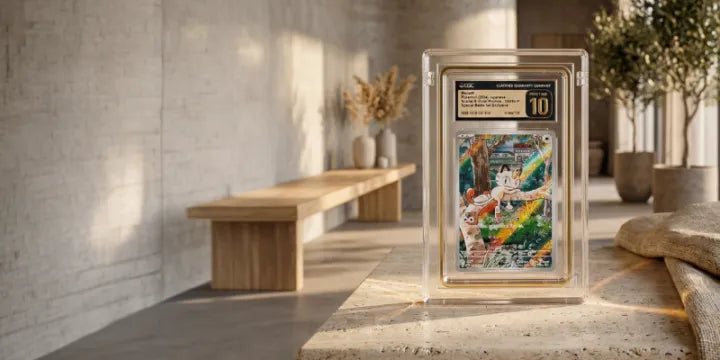
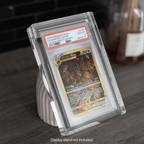
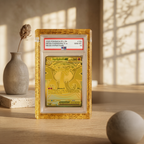
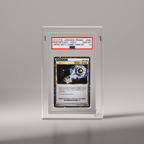
Your graded cards lose value every day they're exposed to UV light and handling damage. Phantom Display cases are engineered with premium acrylic and neodymium magnetic closure, purpose-built for PSA slabs. Rated 4.7/5 for quality by collectors.
Shop PSA Display Cases →How PSA Grading Standards Differ for Vintage vs. Modern Cards
PSA evaluators apply card-specific knowledge during grading. They know that certain vintage cards commonly have slight print line issues that do not automatically disqualify a PSA 10, while the same print lines on modern cards would likely cap the grade at PSA 9. This institutional knowledge, accumulated over millions of submissions, creates an evaluation framework that adapts to each card's era and manufacturing context.
Surface standards show the biggest era-based differences. Many vintage sets have inherent print line characteristics that do not prevent PSA 10 grades, while modern cards with visible print lines typically cap at PSA 9. Light scratches from sleeve insertion might not impact vintage card grades significantly, while the same scratches on modern cards could prevent high grades. This reflects evolving collector expectations and storage practices across decades of the hobby.
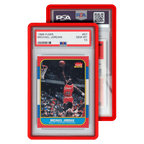
Centering tolerances receive slightly more leniency for vintage cards because older printing equipment could not achieve the precision of current manufacturing processes. A Michael Jordan rookie card from the mid-1980s might receive favorable treatment for centering issues that would significantly hurt a recent Topps Chrome card's grade.
Corner and edge standards also reflect manufacturing realities. Vintage cards with slightly soft corners from die-cutting limitations receive different treatment than modern cards with the same softness, which would be attributed to handling rather than manufacturing.
Holographic foil quality adds another layer to modern card evaluation. Foil scratching, rainbow patterns, and manufacturing inconsistencies in holographic treatments receive scrutiny that did not exist for earlier card types. These factors can dramatically impact grades on premium modern cards where foil quality represents a primary visual element.
PSA's grading data confirms these era-based patterns. 90% of Ultra-Modern Sport cards (2017-present) grade at PSA 8 or higher, partly because modern printing produces better-centered, cleaner cards. Compare that to 80% of Modern Sport cards (1986-2016) grading at PSA 8 or higher, and 80% of Vintage TCG cards (pre-2003) achieving PSA 7 or higher.
Printing Defects vs. Handling Damage: What PSA Graders Actually Distinguish
One of the most overlooked aspects of PSA grading standards is how evaluators separate factory defects from collector damage. This distinction matters because factory defects generally receive more lenient treatment than post-production damage, even when the visible impact appears similar.
Factory print lines appear as thin lines running across the card surface, created when printing machinery malfunctions or ink does not flow properly. These are different from random scratches caused by handling. PSA evaluators identify factory lines by their consistency. They tend to appear at the same location across multiple cards in a print run, while handling scratches are random and unique to each card.
Color registration problems occur when different ink layers do not align perfectly, creating blurry images or color bleeding effects. These happened at the factory, not in your collection. PSA recognizes these as manufacturing characteristics, though severe registration issues still hurt grades.
Cutting variations affect card dimensions and edge quality. Some cards came from the factory with slightly rough edges or dimensional variations. PSA recognizes these as manufacturing issues, but they still impact condition ratings. The distinction is that factory-related edge roughness receives more tolerance than obvious handling damage.
PSA's experience with millions of cards helps graders identify patterns typical of specific manufacturers, printing runs, and time periods. Both types of imperfections affect the final grade, but factory defects typically receive less severe penalties than equivalent handling damage.
Common Mistakes That Tank Your PSA Grade
After watching thousands of submissions come back with unexpected grades, clear patterns emerge in what goes wrong. These are the most common mistakes that cost collectors money and cause grading disappointments.
Estimating centering by eye instead of measuring. This is the single most expensive mistake collectors make. That "perfectly centered" card might actually measure 58/42, which automatically drops it from PSA 10 to PSA 9 territory. Always measure with rulers or digital calipers. Your eyes consistently deceive you when estimating proportions, especially on smaller cards.
Using inadequate lighting during self-assessment. Surface scratches that are invisible under normal room lighting become obvious under PSA's bright professional grading setup. Before submitting, examine cards under direct LED lighting at multiple angles. If you cannot identify scratches under harsh light, PSA graders will not see them either. If you can, adjust your grade expectation downward.
Confusing factory print defects with handling damage. Some collectors reject perfectly gradable cards because they see a print line and assume it will kill the grade. Others submit cards with handling scratches, thinking they are harmless manufacturing characteristics. Learn to recognize the difference: factory lines are consistent across a print run, handling scratches are random.
Ignoring handling evidence that accumulates over time. Finger oils, sleeve insertion marks, and storage pressure create surface changes that appear minor but affect PSA grades. Cards stored in penny sleeves for extended periods can develop texture changes from plastic contact that impact surface grading.
Submitting cards hoping for a generous grade. 80% of Modern Sport cards grade PSA 8 or higher, but that 20% failure rate represents millions of disappointed collectors. If you are uncertain between PSA 7 and PSA 8, assume PSA 7. Submit cards you are confident will hit target grades, not cards you hope might surprise you.
How to Assess Your Cards Before Submission
A systematic pre-submission assessment saves money and prevents disappointment. Here is the process that experienced collectors use to predict PSA grades before paying submission fees.
Step 1: Measure centering precisely. Use a ruler or digital calipers to measure total card dimensions and establish center points. Then measure from center to each image border for exact ratios. For PSA 10 standards, front centering cannot exceed 55/45 while backs allow up to 75/25. Document your measurements. Borderline results help you decide between service levels and set realistic expectations.
Step 2: Inspect corners under magnification. Use a jeweler's loupe (10x minimum) or macro photography to examine each corner individually. Perfect corners appear sharp and defined under magnification, with clean color transitions and no edge fraying or rounding. Even microscopic wear that seems negligible in normal lighting will be caught during professional evaluation.
Step 3: Examine edges under directional light. Hold a bright LED light at various angles and check all four edges systematically for roughness, nicks, whitening, or color bleeding. Remember that some factory-cut roughness is acceptable, but any whitening from handling typically prevents PSA 10 grades.
Step 4: Assess surfaces with harsh lighting. Examine surfaces under bright LED light from multiple angles. Look for scratches, indentations, print spots, staining, or fingerprint residue. Distinguish between consistent print characteristics appearing across the entire image (likely manufacturing) versus random damage from handling (grade-killer).
Step 5: Document and rate each category. Create a record for each card: centering measurements, corner condition notes, edge quality assessment, and surface examination results. Rate each category honestly against published PSA standards. Your weakest category predicts your final grade outcome.
Handle cards with cotton gloves to prevent fingerprint transfer during inspection. Work over a clean, soft surface like a microfiber cloth to prevent accidental damage. Remove cards from penny sleeves slowly to avoid creating static that attracts dust particles to the card surface.
How to Protect High-Grade Cards for Long-Term Value
Once cards return from PSA in those protective slabs, proper storage and display become crucial for maintaining condition and preventing damage that could affect resale value. Environmental factors like UV exposure, temperature fluctuations, and physical impacts can all compromise even graded cards over time. Learning about premium display cases that protect your cards helps preserve your investment while allowing proper enjoyment of your collection.
UV protection proves especially important for long-term value preservation, as prolonged light exposure can cause color fading even through PSA slabs. Choose display solutions that filter harmful UV wavelengths while maintaining card visibility for enjoyment and authentication purposes.
Physical protection matters because PSA slabs themselves can be damaged through improper handling or storage, potentially affecting both aesthetics and resale appeal. Consistent temperature and humidity conditions prevent warping, condensation, and material stress over decades of ownership.
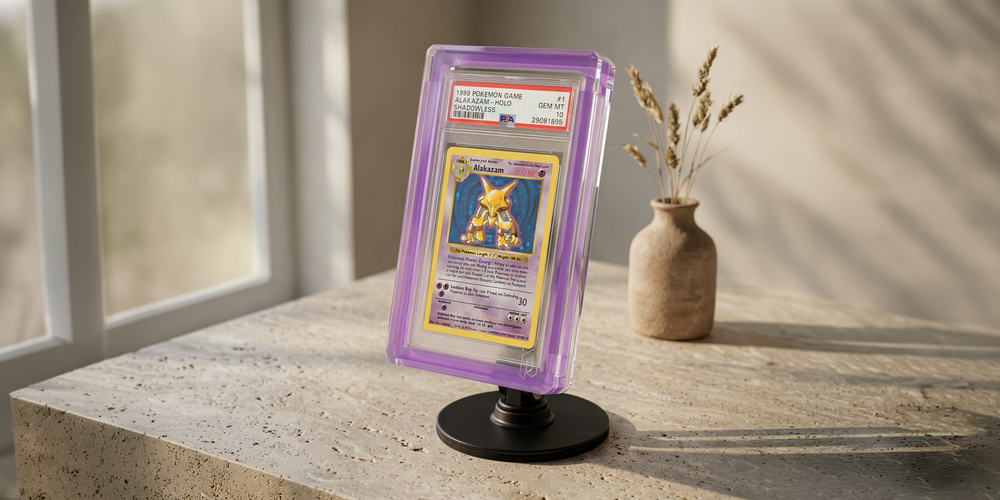
Once your cards return from PSA with those coveted high grades, they deserve display solutions that match their quality. The Magneto series provides museum-quality UV protection with magnetic mounting, and the Phantom Ultra delivers the same protection in a free-standing design. Both showcase your investment without compromising security or accessibility. For collectors looking for creative ways to showcase their high-grade cards, explore our guide on graded card display ideas to create a setup worthy of your collection.
FAQ
What is the difference between PSA 9 and PSA 10 grading standards?
PSA 10 requires centering within 55/45 on the front and 75/25 on the back, while PSA 9 allows 60/40 front centering and 90/10 back centering. Beyond centering, PSA 10 demands perfect corners, edges, and surfaces under magnification, while PSA 9 permits one very minor imperfection that does not significantly impact overall appearance. The difference often comes down to a single minor defect that prevents perfection.
How does PSA grade vintage cards differently than modern cards?
PSA applies more lenient surface and centering standards to vintage cards, recognizing manufacturing limitations from earlier printing technology. Print lines, slight color registration issues, and minor edge roughness that would prevent PSA 10 on modern cards might be acceptable on vintage cards from the same era's typical production quality. However, major condition issues like creases or heavy stains receive consistent treatment regardless of card age.
What centering requirements does PSA use for each grade?
PSA centering requirements progress from 55/45 front, 75/25 back for PSA 10, to 60/40 front, 90/10 back for PSA 9, 65/35 front, 90/10 back for PSA 8, and 70/30 front, 90/10 back for PSA 7. Lower grades allow progressively more centering variance, with back centering staying consistent at 90/10 from grades 7 through 9.
Why did my card get a lower PSA grade than expected?
The most common reasons are centering measured incorrectly by eye rather than precise tools, surface defects invisible under normal lighting but obvious under PSA's professional examination conditions, handling evidence like finger oils or sleeve marks that accumulated over time, and applying the wrong era standards (expecting vintage leniency on modern cards or modern standards on vintage cards).
Does PSA grade Pokemon cards differently than sports cards?
PSA applies the same fundamental grading standards to all trading cards, but evaluators consider manufacturing characteristics specific to each card type and era. Pokemon cards from certain sets have known printing quirks that receive appropriate treatment, just as sports cards from specific manufacturers have era-appropriate tolerances. The core centering, corner, edge, and surface criteria remain consistent across all card types.
How strict are PSA's grading standards compared to BGS?
PSA is more conservative than BGS for surface quality but similar for centering requirements. Most collectors find PSA grades run slightly lower than their personal assessments due to professional grading equipment and training. BGS offers sub-grades for each category, while PSA provides a single overall grade. For a detailed comparison, check out our BGS vs PSA guide.
Should I grade cards that might get PSA 8 or lower?
For most modern cards, PSA 8 and below rarely justify grading costs unless the card has significant raw value or personal importance. Consider whether your PSA 8 will be worth substantially more than raw condition to justify submission expenses, shipping costs, and time investment. Vintage cards are a different story, as even lower grades can carry meaningful premiums for key cards.