






Best Graded Card Display Cases in 2026: PSA, BGS, CGC & SGC Compared
Most collectors spend more time choosing their grading tier than choosing where the card ends up. The result: a freshly graded slab in a generic marketplace case where the slab wobbles, the UV filter is effectively decorative, and the whole setup looks like it belongs at a card show clearance table. Finding the best graded card display case isn't just aesthetics, it's the last protection decision in a long investment chain.
And there are more slabs to protect than ever. PSA alone graded 19.26 million cards in 2025, up 26% year over year, per GemRate data reported by Yahoo Sports. Whether you collect PSA-graded sports cards, BGS subgrade slabs, CGC Pokémon holders, or SGC-encapsulated vintage, your cards need more than the holder alone. The slab is the first line of defense; the display case is the second. UV light bleaches ink incrementally, every single day. Acrylic that's too thin scratches easily and hazes over time. A loose-fitting slot lets slabs shift and chip their corners, slow damage, but damage.
This guide covers what separates a good display from a throwaway one, how each Phantom line is sized per grading company, and the specific recommendations worth your money across single-slab, multi-slab, wall, desk, and entry-level categories.
Quick Comparison: Best Graded Card Display Cases
| Product | UV Protection | Closure | Sizings | Best For |
|---|---|---|---|---|
| Magneto | Up to 99.6% | Magnetic | PSA/CGC/TAG or BGS. | Most collectors. |
| Magneto (Thick Cards) | Up to 99.6% | Magnetic | PSA/CGC or BGS. | Autograph and patch cards in oversized holders. |
| Magneto (Color) | Same acrylic as the Magneto | Magnetic | PSA/CGC/TAG. | Color-matched setups. |
| Ultra | Up to 99.6% | Magnetic | PSA/CGC/TAG, BGS or SGC. | Premium standalone presentation. |
| Nano | UV-resistant acrylic | Magnetic | PSA/CGC/TAG or BGS. | Slim-profile protection in volume. |
| Magneto Base Stand | Pairs with any Magneto | Stand only | Holds any Magneto. | Desk centerpiece. |
| Magneto Wall Mount | Pairs with any Magneto | Mount only | Holds any Magneto. | Wall display. |
| Pennzoni 50-card hardwood | Varies by listing | Varies | Check slot depth. | Multi-slab gallery wall. |
What Actually Matters in a Graded Card Display Case
UV Protection, and Why "UV Resistant" Isn't Good Enough
Every display case marketed to collectors claims UV protection. The filtration percentage is what matters. The difference between a 99.6% UV block and a 92% UV block sounds minor until you do the math: at 92%, roughly 8% of UV radiation reaches your card every day. Over years of indirect natural light, that compounds into real ink fading and yellowed card stock, slower than direct sunlight, but just as permanent.
Look for displays with acrylic rated at 99%+ UV filtration. "UV resistant" or "UV safe" without a percentage tells you nothing. Cast acrylic also holds clarity and resists internal yellowing better than extruded acrylic over the long term; the difference isn't obvious at purchase but becomes visible after several years of display. The Ultra and Magneto lines offer up to 99.6% UV protection using premium cast acrylic, the kind of spec that holds up over years of display.
One thing the display layer does not replace: knowing what the slab itself does and does not block. We keep the full answer in our dedicated PSA slab UV breakdown, including where the display has to do the work.
Slab Compatibility: Displays Are Sized Per Grading Company
This is where most buyers get burned. Grading companies encapsulate cards in holders of different sizes, and a display built around PSA dimensions will not grip a BGS slab the same way. That is why every Phantom display is sold in per-grader sizings rather than one loose slot: you pick the sizing that matches your grader at checkout.
- PSA, CGC and TAG slabs share a sizing across the Phantom lineup: the Magneto, Nano and Ultra all come in a PSA/CGC/TAG fit.
- BGS slabs get their own dedicated sizing across the same lines. Browse the BGS displays if your collection leans Beckett.
- SGC slabs: the Ultra line lists a dedicated SGC sizing. Standard SGC slabs are not a listed fit for the Magneto or Nano, so check the sizing options on each product page.
- Autograph and patch cards come back from grading in thicker holders. Those need the Thick options, the Magneto (Thick Cards) or the Nano's Thick depth, rather than a standard slot.
If a listing does not say which grading company a display is sized for, assume it fits none of them well. Measure your thickest slab before buying any third-party case.
Dust, Moisture, and Impact Resistance
While the standard grading slab provides a baseline of protection, it isn't impervious to dust infiltration or accidental abrasions. Tiny dust particles slip into poorly sealed enclosures, and humidity can create fogging, warping, or mold growth over the long term. Opt for displays with tight seams and a closure that seats flush, and for valuable collections, keep the room itself climate-stable.
Impact resistance matters too. Accidental drops or minor bumps can crack brittle plastic and jar the encased card. Acrylic is highly shatter-resistant compared to glass, making it the safer choice for both durability and daily handling.
Magnetic Closure vs. Traditional Closure: A Real Difference in Practice
Traditional closure display cases look serious. In practice, they create friction: a common complaint in collector forums is that they get opened once for setup, then sit untouched for months. Every swap needs tools and a cleared surface, so most collectors stop rotating their displays entirely.
Magnetic closures change the behavior. A neodymium magnetic seal opens and closes in seconds. You'll actually rotate what's inside, pull cards out to show people, and treat the display as a living showcase rather than semi-permanent storage you're reluctant to touch. Every Phantom display closes with a neodymium magnetic seal, from the entry-level Nano to the flagship Magneto and Ultra.
Single-Slab vs. Multi-Slab: Two Different Products for Two Different Problems
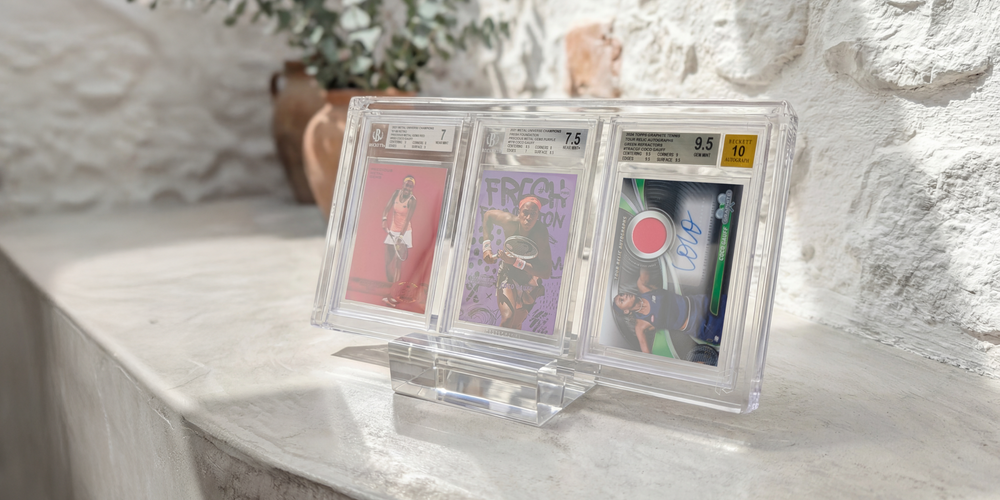
A single-slab display is for a card that deserves a spotlight, the PC piece, the highest-graded card in your collection, the one you'd frame if it weren't in a slab. A multi-slab case is for showing off a collection as a whole. They solve different problems. Most serious collectors eventually own both.
Acrylic vs. Other Materials: The Clear Winner
When it comes to storing and displaying graded cards, acrylic consistently ranks above standard plastics like polypropylene or PVC, and even glass.
- Superior clarity: Acrylic offers a crystal-clear view of your card, free from the slight distortion or "haze" often seen in lower-quality plastics. Collectors who value the visual pop of their cards will appreciate acrylic's near-glass transparency, minus the heaviness and fragility that come with actual glass.
- UV resistance: Quality acrylic is manufactured with UV protection baked into the material, blocking the rays that fade and discolor cards over time. Generic clear plastics often lack meaningful UV filtration entirely.
- Durability and scratch resistance: While acrylic can scratch if handled recklessly, it's more resistant than thin commodity plastics, and a gentle polish often restores minor scratches, preserving clarity.
- Lightweight and easy to display: Acrylic weighs substantially less than glass, making it simpler to transport your collection or mount it on a wall without added strain or risk.
In contrast, plastics like PVC can off-gas chemicals that harm your cards over time, and commodity polypropylene holders rarely offer robust UV shielding or clarity. Acrylic's balance of aesthetics, protection, and longevity makes it the premium choice for any grading company's slabs.
The Best Graded Card Display Cases in 2026
Best Overall (Single Slab): Phantom Display Magneto
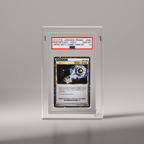
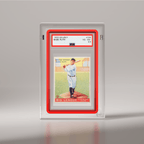
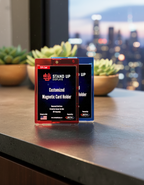
The Magneto is the right call for most collectors. It gets the fundamentals right: up to 99.6% UV protection, a neodymium magnetic seal that opens in seconds, cast acrylic that doesn't cloud or yellow, and a patent-pending integrated magnetic mount, a precision-machined iron core inside the acrylic, that moves the same display between wall, stand, and desk.
Fit is handled at checkout, not by compromise. The Magneto is sold in two sizings, one for PSA, CGC and TAG slabs and one for BGS slabs, in Rounded or Prism edge styles. As of September 2026 it runs $55 to $60 depending on the edge style.
If you use GradedGuard or Slabmags protective cases, dedicated variants exist: the Magneto (GradedGuard) and the Magneto (Slabmags), each built to hold the slab and its case together without stretching a standard slot.
Best for: most collectors with PSA, CGC, TAG or BGS slabs who want a premium single-slab display they'll actually open.
Best for Autograph and Patch Cards: Magneto (Thick Cards)
Autograph and patch cards come back from grading in noticeably thicker holders, and a standard slot either won't take them or grips them loosely. The Magneto (Thick Cards) is purpose-built for those oversized slabs: the same acrylic, closure and magnetic mount as every Magneto, with a deeper slot.
It comes in PSA/CGC and BGS sizings. As of September 2026 it runs $60 to $65.
Best for: autograph and patch cards, and any oversized holder that wobbles in a standard slot.
Best for a Personal Touch: Magneto (Color)
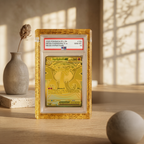
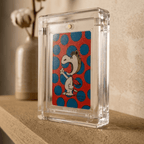
New to the lineup since this guide first ran: the Magneto (Color) wraps the same engineering, crystal acrylic, a neodymium magnetic seal and the integrated magnetic mount, in six colorways from textured gold to black, with Rounded or Prism edge styles. Match the frame to the card's colorway or to the room.
It's listed in the PSA/CGC/TAG sizing. As of September 2026 it runs $50 to $65 depending on colorway and edge style.
Best for: collectors who want the display to make a statement of its own, or to color-match a themed shelf.
Best Multi-Slab Wall Display: Pennzoni Hardwood Cases
Phantom doesn't make a multi-slab wall unit, so here's the honest recommendation: for collectors who want to hang an entire collection on one wall, Pennzoni's hardwood multi-slab cases are a fixture in collector recommendation threads. Solid wood construction, a UV-filtering acrylic window, and wall-mount hardware included. The 50-card version holds a substantial collection without becoming a furniture project.
The tradeoff versus acrylic single-slab displays: no quick access to individual cards, and slot depth varies across graders, so check the listed dimensions against your thickest slabs before ordering. But for a collection wall that reads as a room feature rather than a storage solution, the format is hard to beat.
Best for: collectors who want to hang 20 to 50 slabs as one gallery wall.
Best Entry Point: Phantom Display Nano
The Nano is the entry point into a proper graded card display: the same crystal acrylic quality as the flagship displays at half the thickness, engineered at 5mm per side, with the same neodymium magnetic seal. It's a slim, free-standing display, not a stripped-down one.
At a price that overlaps with generic marketplace cases, the difference is what's inside the spec sheet: UV-resistant acrylic that protects holos, chrome finishes and vintage ink from long-term exposure, handcrafted finishing, and a slot actually sized to a grading company. It comes in Standard and Thick depths, each in PSA/CGC/TAG and BGS sizings. As of September 2026 it runs $19 to $21.
Best for: large collections, duplicates, runner-up PC cards, and first displays that still need real protection.
Best Desk Centerpiece: Magneto Base Stand
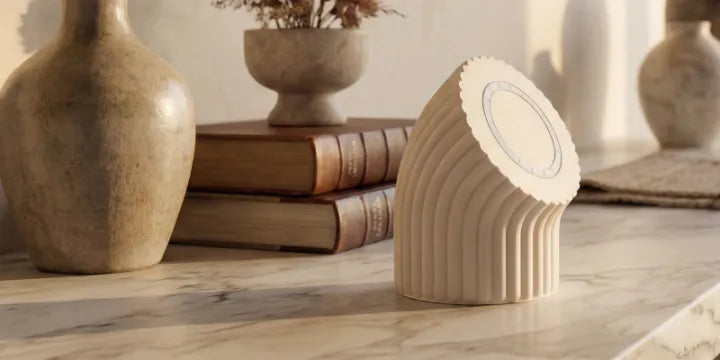
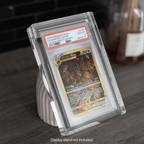
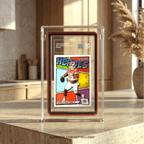
The Magneto Base Stand is what you buy when one card deserves to be the focal point of a room. It's a weighted stand in solid concrete with a fluted, brutalist texture, and a magnetic ring mount on top that any Magneto display snaps onto, including the GradedGuard, Slabmags, Thick Cards and Color variants. The display attaches in seconds and faces you at eye level instead of lying flat on a shelf.
The stand is sold on its own, so pair it with the Magneto sizing that fits your slabs. As of September 2026 it runs $105. It is also one of the few display purchases that actually makes sense as a gift.
Best for: a single card you want as a desk or shelf centerpiece. The kind of thing that makes someone ask what it is before they see what's inside.
Best for Wall Display: Magneto Wall Mount
The Magneto Wall Mount is a heavy-duty articulating metal arm that floats a Magneto off the wall, with a pivoting hinge to dial in the viewing angle and catch the light. It's the graded card wall mount route for collectors building a gallery-style arrangement of individual statement cards rather than one fixed frame. As of September 2026 it runs $25, and it works with every Magneto variant.
Best for: wall display setups where each card gets its own position, height and spacing.
Upgrade Your Display Setup
Ready to showcase your collection properly? Phantom displays are engineered with premium crystal acrylic and a neodymium magnetic seal, sized per grading company across PSA, BGS, CGC, SGC and TAG. Rated 4.7/5 for design by collectors.
ShopBest Premium Presentation: Ultra
The Ultra is the display that treats a card like gallery art: 10mm of crystal acrylic per side, up to 99.6% UV protection, and a neodymium magnetic closure, with the heft to anchor a shelf on its own. It also comes in a Triple format for a graded trio presented as a single piece.
Sizings cover PSA/CGC/TAG and BGS, and the Ultra line is also where SGC collectors will find a listed SGC sizing. As of September 2026 the Ultra runs $45 to $115 across the single and triple formats.
Best for: collectors who want the display itself to be part of the statement, or a three-card centerpiece.
How a Quality Display Case Enhances Card Value
A graded card in top-notch condition typically commands a higher market price than a poorly stored counterpart. But the display does more than protect:
- Perceived quality: When you present a graded card in a sleek acrylic display, you immediately elevate its perceived worth. Presentation matters, especially if you ever plan to sell or trade your cards.
- Investment preservation: Even a small scratch on a slab can detract from the overall appeal and potentially the resale value. By safeguarding your slabs in a proper display, you maintain the card's desirability in the marketplace.
- Authentication confidence: A robust display deters tampering and accidental knocks to the grading holder. Buyers and collectors can see the card remains securely in its original verified state.
What to Avoid in a Graded Card Display Case
"UV safe" labels without a filtration percentage: Marketing language without a spec. A case that lets 5 to 8% of UV through daily causes compounding damage over years, especially for vintage cards with fragile ink from decades-old printing processes. Always ask for the number.
Traditional closure cases for everyday use: Fine for permanent installations you plan never to touch. Not practical for collectors who actually engage with their collection.
"Fits every slab" listings without slot specs: If a listing doesn't name the grading companies it is sized for, it almost certainly grips at least one of them badly. Loose fit equals corner wear over time, slow damage, but real damage.
Generic mass-market cases at any price: The generic cases that dominate marketplace search results are built for mass production, not card protection. Thinner acrylic, absent or unspecified UV filtration, and loose slots that let slabs shift. The Nano overlaps them on price and occupies a different category: a documented UV-resistant spec and slots sized per grading company.
Best Practices for Long-Term Care
- Store in a cool, dry place: Avoid extremes in temperature or humidity. If possible, consider a climate-controlled space to prevent moisture or heat damage to both the slab and the display.
- Handle with care: Always pick up the display by the edges or corners to minimize fingerprints and scratches on the acrylic surface.
- Clean gently: Use a soft microfiber cloth and, if needed, a non-abrasive plastic cleaner. Steer clear of harsh chemicals like acetone that can damage both the acrylic and the grading label.
- Keep out of direct sunlight: Even with up to 99.6% UV protection, no consumer display is rated for sustained direct sun exposure. Indirect natural light or LED lighting is the safest long-term approach.
Frequently Asked Questions
What is the best display case for PSA graded cards?
The Magneto in its PSA/CGC/TAG sizing is the pick for most collectors. It pairs up to 99.6% UV protection with a neodymium magnetic seal and a slot cut for the PSA holder rather than a loose generic tray. For a full wall of PSA slabs, a multi-slab hardwood case like Pennzoni's covers volume, while the Phantom PSA lineup covers the spotlight pieces.
What is the best display case for BGS graded cards?
Every core Phantom display, the Magneto, the Magneto (Thick Cards), the Nano and the Ultra, is listed in a dedicated BGS sizing, so BGS slabs get a purpose-cut slot rather than a stretched PSA one. Start with the Magneto in the BGS sizing; step up to the Thick Cards version if the card is an autograph or patch issue in an oversized holder. Browse the BGS displays for the full set.
What is the best display case for CGC graded cards?
CGC slabs share a sizing with PSA and TAG across the Phantom lineup, so the standard Magneto in the PSA/CGC/TAG sizing fits CGC holders without wobble. If you display CGC Pokémon slabs alongside PSA sports cards, the same sizing covers both. See the dedicated Pokémon card displays for themed options.
Do PSA slabs have UV protection?
Treat the slab as authentication and physical protection, and the display as the UV layer. If a card lives anywhere near daylight, the UV spec has to come from the display, not from the holder it was graded into. We keep the complete answer, including what actually fades and why, in our PSA slab UV breakdown.
What is the best way to display PSA slabs?
Three setups cover nearly everyone. On a desk or shelf: a free-standing display like the Magneto or Ultra, or the Base Stand if the card should sit at eye level. On a wall: the Magneto with the Wall Mount for a gallery of individual cards, or a multi-slab hardwood case for volume. In rotation: a magnetic closure makes swapping the featured card a ten-second habit rather than a project. More layouts live in our display ideas guide.
Do display cases actually protect against UV damage?
Yes, if the filtration spec is high enough. Standard clear acrylic without UV treatment blocks almost nothing meaningful. Displays rated at 99%+ UV filtration materially reduce the exposure that bleaches ink and yellows card stock over time. Keep displays out of direct sunlight regardless of spec; no consumer display case is rated for sustained direct sun exposure.
Is 99.6% UV protection meaningfully better than 98%?
For casual displays in indirect light, the day-to-day difference is small. Over years of cumulative exposure, higher filtration reduces compounding damage. If you're holding a card as a long-term investment, the higher spec matters. For cards you'll rotate or sell in the near term, the difference is marginal.
How do I display multiple graded cards on a wall?
Multi-slab hardwood cases, like Pennzoni's 50-card format, are purpose-built for collection walls and include wall hardware. For a gallery-style arrangement of individual cards at different heights and spacing, a graded card wall mount such as the Magneto Wall Mount gives you full layout control rather than committing to one fixed frame.
What about the Ultra and the Magneto (Color)?
The Ultra is the premium presentation pick: 10mm of crystal acrylic per side and a larger standalone presence, in single and triple formats. The Magneto (Color) keeps the standard Magneto engineering and adds six colorways for collectors who want the frame to match the card or the room. Both close with the same neodymium magnetic seal as the rest of the lineup.
Showcase with Confidence
Ready to elevate your display and preservation game? Explore the full catalog of card display cases and trading card displays, sized per grading company, from the flagship Magneto to the Nano at its accessible price point.
Bottom Line: The Best Graded Card Display Case for Every Collection
The best graded card display case for most collectors is the Magneto: up to 99.6% UV protection, a magnetic closure you'll actually use, and dedicated sizings for PSA/CGC/TAG and for BGS.
For autograph and patch cards in oversized holders: the Magneto (Thick Cards). For volume protection across a large collection: the Nano. For a multi-card wall: Pennzoni's hardwood format, or a Wall Mount gallery. For the desk centerpiece: the Base Stand. For GradedGuard or Slabmags protective cases: dedicated Magneto variants exist for each.
Browse the PSA slab lineup or the full graded card display collection. Every card in a grading slab has already survived the hard part. The display is the last decision, and it's easier to get right than most collectors think.