










CGC Card Grading Guide for Beginners (2026)
What Is CGC? The Grading Company Built for TCG Collectors
If you collect Pokemon, One Piece, or any other trading card game, you have probably seen CGC slabs appearing more and more in collections, at card shows, and across online marketplaces. CGC (Certified Guaranty Company) has become the second-largest grading company in the trading card space, and its growth shows no signs of slowing down.
CGC started as a division of Certified Collectibles Group, a company best known for grading comic books since 2000. Their expertise in authenticating and encapsulating collectibles gave them a strong foundation when they expanded into trading cards. That launch positioned CGC as a serious alternative to the two established leaders in card grading: PSA and BGS.
What makes CGC stand out is its momentum in the TCG community. Pokemon collectors in particular have embraced CGC grading, drawn to its half-point grading scale, distinctive slab design, and the prestige of earning a CGC Pristine 10. If you are serious about grading TCG cards, CGC deserves your full attention.
The CGC Grading Scale: 1 to 10 with Half-Point Precision
CGC uses a 1 to 10 grading scale with half-point increments. This gives graders 19 possible grade levels, offering more precision than PSA's whole-number system while following a similar overall structure.
Here are the grades you will encounter most often at the top of the scale:
| Grade | Label | What It Means |
|---|---|---|
| 10 | Pristine | Flawless under 10x magnification. The highest grade CGC assigns. Gold label. |
| 10 | Gem Mint | Exceptional condition. Virtually flawless to the naked eye. |
| 9.5 | Mint+ | Near-perfect condition with only the slightest allowable imperfections. |
| 9 | Mint | Outstanding condition with minor imperfections barely visible to the naked eye. |
| 8.5 | NM/Mint+ | Excellent condition with very minor wear. |
| 8 | NM/Mint | Very strong condition. Minor imperfections only under close inspection. |
| 7.5 | Near Mint+ | Slight surface wear or minor edge imperfections visible. |
| 7 | Near Mint | A well-preserved card with some visible wear. |
Grades below 7 follow the same half-point increments down to 1 (Poor), though most collectors targeting display-worthy cards focus on grades 8 and above.
CGC Pristine 10 vs. CGC Gem Mint 10: Understanding the Difference
CGC assigns two tiers of "10" on their scale, and the difference matters.
A CGC Pristine 10 is the absolute pinnacle. The card must be flawless under 10x magnification across all grading criteria. These receive a distinctive gold label and are exceptionally rare. Pristine 10s command the highest premiums of any CGC grade.
A CGC Gem Mint 10 is still an elite grade, representing a card in exceptional condition that is virtually flawless to the naked eye. It sits just below Pristine in the CGC hierarchy.
Note: CGC previously offered a "Perfect 10" grade that sat above Pristine. That grade was retired when CGC Trading Cards and CSG merged in July 2023. Cards graded Perfect 10 can be reholdered as Pristine 10, though CGC recommends against reholdering them since Perfect 10 labels may carry their own collector value. If you encounter a CGC Perfect 10 slab on the secondary market, it is from the earlier grading scale.
For many collectors submitting modern cards, a CGC Gem Mint 10 is the realistic top-tier target. It is broadly comparable in market perception to a PSA 10 Gem Mint.
A Note on Subgrades
CGC previously offered optional subgrades on their labels, where each of the four grading criteria (centering, corners, edges, surface) received an individual score. This feature has been discontinued. If you encounter CGC slabs with subgrades on the secondary market, those were graded under the earlier system. Current CGC submissions receive a single overall grade without individual category scores.
What CGC Evaluates: The Four Grading Criteria
CGC graders assess every card across four categories. These are the same fundamental criteria used by PSA and BGS, though each company applies its own standards and tolerances.
- Centering: How well the card's printed image is centered within the card borders, evaluated on both front and back. CGC measures centering as a percentage ratio (for example, 60/40 or 55/45). Tighter centering earns higher marks.
- Corners: The sharpness and condition of all four corners. Graders examine for rounding, fraying, dings, and any loss of material. Corners are often the first area to show wear.
- Edges: The condition along all four edges of the card. Graders look for chipping, rough cuts, nicks, and any inconsistencies in the card's edge.
- Surface: The overall surface condition, including scratches, print lines, indentations, staining, and any other surface-level imperfections. For holographic and textured cards, surface evaluation accounts for the unique characteristics of those finishes.
Each criterion contributes to the final grade.
CGC vs. PSA vs. BGS: Where CGC Fits
If you have read our BGS vs. PSA comparison, you already know the core differences between those two grading giants. Here is where CGC fits into the landscape:
| Feature | CGC | PSA | BGS |
|---|---|---|---|
| Scale | 1-10, half-point increments | 1-10, whole numbers | 1-10, half-point increments |
| Subgrades | No longer offered | Not available | Standard (4 categories) |
| Top Grade | Pristine 10 | Gem Mint 10 | Black Label 10 (all subgrades 10) |
| Strongest Category | Pokemon, TCG | Sports, Pokemon, broad | Sports, high-end vintage |
| Slab Design | Ultrasonically welded, fully clear | Standard encapsulation | Standard encapsulation |
| Market Liquidity | Growing, strong in TCG | Highest overall | Strong in premium segment |
CGC's key advantages:
- Half-point precision. The half-point scale gives you more granularity than PSA's whole-number system, allowing a clearer picture of exactly where your card stands.
- Strong TCG reputation. CGC has built real credibility in the Pokemon and trading card game space. If your collection leans TCG, CGC slabs carry meaningful weight.
- Distinctive slab construction. CGC's ultrasonically welded, fully clear holder offers crystal-clear optics and a slightly thicker profile than PSA slabs.
- Two tiers of 10. The Pristine 10 and Gem Mint 10 distinction creates an additional level of prestige at the top of the scale that PSA's single Gem Mint 10 does not offer.
CGC is not trying to replace PSA or BGS. It occupies its own position in the market, and for TCG collectors in particular, it has become a first-choice grading service rather than just an alternative.
Who Should Grade with CGC?
CGC is a strong choice for several types of collectors:
- Pokemon and TCG collectors. CGC has earned significant trust in this community. If you are submitting Pokemon, Magic: The Gathering, One Piece, or other TCG cards, CGC slabs are well-recognized and actively sought on the secondary market.
- Collectors who want a clean, single-grade label. Unlike BGS, which includes subgrades on every label, CGC presents one overall grade. This makes labels cleaner and easier to evaluate at a glance on the secondary market.
- Anyone chasing the highest possible grade distinction. The CGC Pristine 10 is one of the most exclusive grades in the hobby. If you believe your card is truly flawless, CGC gives you the opportunity to earn a label that reflects that level of perfection.
- Collectors who value slab clarity and construction. CGC's fully clear, ultrasonically welded holder gives an unobstructed view of the card from every angle, a detail display-focused collectors appreciate.
For current CGC submission pricing and turnaround times, check CGC's official website directly. These change frequently based on demand and service tier, so real-time information is always your best reference.
CGC Slab Design: What Makes It Different
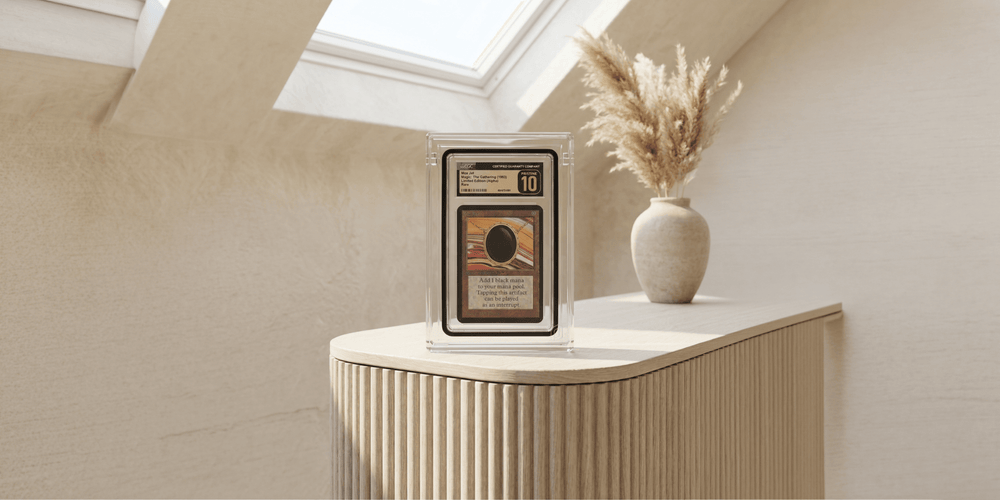
CGC card holders use ultrasonic welding and fully clear construction. Unlike PSA holders, which have frosted or semi-opaque edges, CGC slabs are transparent on all sides, giving collectors an unobstructed view of the card from every angle.
CGC slabs are also slightly thicker than PSA holders, which gives them a more substantial feel in hand. The ultrasonically welded seam creates a secure bond without visible hardware or fasteners. For collectors who display their cards, the crystal-clear optics and clean lines of the CGC holder make it a visually appealing choice.
How CGC Slab Sizing Affects Display
For display purposes, CGC slabs share the same general dimensions as PSA slabs. This means display solutions designed for PSA-sized holders will also fit CGC cards. When shopping for display cases, look for products that specify PSA/CGC compatibility to ensure a proper fit.
Protecting and Displaying Your CGC Slabs
Grading protects your card's condition score. It does not protect the slab itself, or the card inside it, from environmental damage over time.
UV Exposure: The Silent Threat
Ultraviolet light is the primary long-term enemy of displayed trading cards. UV radiation causes colors to fade, holographic finishes to dull, and surface details to degrade. This damage is cumulative and irreversible. A card that looks perfect today can show visible fading after months of unprotected display near windows or under certain lighting.
This is especially relevant for Pokemon and TCG cards, where holographic patterns, full-art illustrations, and vibrant color printing are central to a card's visual appeal and value. A faded holographic Charizard is not the same card it was before the damage occurred.
For a deeper look at how UV affects trading cards and what you can do about it, read our complete guide: How to Protect Pokemon Cards from UV Damage.
Physical Protection Beyond the Slab
Grading slabs are durable, but they are not indestructible. Drops, impacts, and stacking can scratch the slab surface, chip edges, or in severe cases crack the holder entirely. If you are displaying high-value CGC graded cards, an outer display case adds a critical second layer of defense.
Display Cases Engineered for CGC Slabs
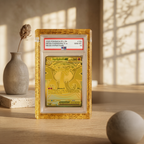
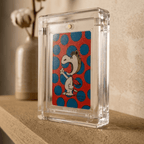
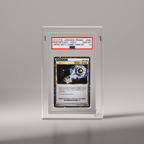
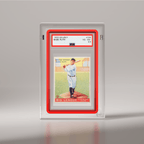
Phantom Display cases are purpose-built for graded card protection and presentation. CGC slabs fit the same case sizing as PSA slabs, so any Phantom case designated for PSA/CGC will accommodate your CGC graded cards.
Here is what that protection looks like in practice:
- UV-resistant crystal acrylic. The Phantom Ultra features 10mm thick pure crystal acrylic per side, delivering superior UV resistance with museum-level transparency. Your card's colors, holographic finish, and surface details stay protected from light damage while remaining fully visible.
- Neodymium magnetic closure. Every Phantom case uses industrial-grade neodymium magnets for a secure, seamless seal. No tools required. Open and close your case cleanly whenever you need access to your slab.
- Premium foam insert. A precision-cut foam interior cradles your CGC slab, preventing movement and contact with the acrylic walls. Your graded card stays locked in position.
- Handcrafted construction. Each case is individually crafted, not mass-produced. The result is a display piece that matches the premium quality of what it protects.
For collectors who want to mount their CGC slabs on walls or stands without adhesives or tools, the Magneto line features a patent-pending embedded iron core that enables magnetic mounting to compatible wall mounts and desk stands.
For a slimmer profile at a lighter weight, the Phantom Nano offers 5mm acrylic per side with UV-resistant protection and the same neodymium magnetic closure. It is an excellent option for collectors building larger display setups where space efficiency matters.
Start Displaying Your CGC Collection
CGC has earned its place as a top-tier grading company, especially for Pokemon and TCG collectors who value grading precision, slab quality, and the pursuit of that Pristine 10. Whether you are submitting your first card or building a full CGC graded collection, understanding the grading scale, evaluation criteria, and how CGC compares to other services puts you in a stronger position as a collector.
Once your cards come back graded, they deserve more than a stack in a closet or a drawer. Proper UV-protected display preserves condition, prevents fading, and lets you enjoy what you have built every single day.
Browse Phantom Display cases for PSA and CGC slabs and find the right fit for your collection.
Protect Your Graded Cards with UV-Resistant Acrylic
Once your cards are CGC-graded, protect that investment with Phantom Display cases. UV-protective acrylic guards against fading while putting your CGC slabs on full display.
Shop CGC Display Cases