










BGS vs PSA Card Values 2026: Ultimate Resale Guide
A PSA 10 Base Set Charizard and a BGS Black Label of the same card can show substantial price differences in final sale prices. That gap is not random. It reflects fundamental market preferences that every collector needs to understand before submitting their next batch of cards for grading.
Which Grading Company Produces Higher Resale Values: BGS or PSA?
PSA positions itself as the largest and most respected authentication service worldwide, typically commanding higher resale values for most card categories. However, BGS Black Labels often outperform PSA 10s on ultra-premium vintage cards, creating strategic opportunities for collectors who understand market dynamics.
The resale value equation involves grading costs, turnaround times, and market acceptance. PSA's broader collector recognition drives consistent demand across all card categories, while BGS's detailed subgrading system appeals to condition-sensitive vintage collectors willing to pay premiums for transparency.
Both services use different approaches that affect market perception. PSA uses a 10-point grading scale with straightforward numerical grades, while BGS uses four subgrades covering centering, corners, edges, and surface. This granular approach helps BGS cards command premiums when all subgrades achieve perfect scores.
Market trends consistently show PSA maintaining higher average sale prices for modern Pokemon, sports rookies, and mid-tier vintage cards. BGS tends to excel with high-end vintage where condition scrutiny justifies the detailed subgrade analysis that serious collectors demand. For collectors also weighing CGC as an alternative, our CGC grading guide covers that decision in detail.
How Much Premium Does Each Company Add to Raw Card Values?
Professional grading typically multiplies raw card values by substantial amounts, with BGS Base tier pricing at $14.95 making it accessible for authentication and condition verification. The premium varies significantly based on card category, with vintage cards showing the most dramatic value increases after professional authentication.
PSA graded cards generally maintain more consistent premiums across different condition levels. A PSA 8 typically holds stronger value relative to raw condition compared to lower BGS numerical grades, reflecting PSA's broader market acceptance among casual collectors and investors.
BGS premiums concentrate heavily at the top end. BGS high-grade cards with strong subgrades and Black Label perfect scores can command substantial premiums over equivalent PSA grades, but BGS lower grades often lag behind comparable PSA cards in resale value.
The authentication premium alone, proving a card is genuine, adds significant value over raw cards, even before considering condition premiums. Both services provide this authentication value, but PSA's wider recognition makes their authentication more universally accepted by buyers.
How Do BGS Subgrades Create ROI Opportunities That PSA Cannot?
BGS's four-subgrade system (Centering, Corners, Edges, Surface) does more than describe condition. It tells a compelling story that can justify premium pricing above what a single PSA grade achieves. A BGS 9.5 with multiple perfect 10 subgrades often sells above comparable PSA 10 prices because buyers see documented technical excellence in specific attributes.
Modern Pokemon, basketball, and football cards in pack-fresh condition represent BGS's sweet spot. These cards can achieve perfect subgrades more easily than vintage cards with decades of handling. Recent auction results show BGS 9.5 cards with perfect centering commanding meaningful premiums over PSA 10 equivalents in identical conditions.
The decision point is straightforward: if your card has at least 2-3 attributes that could achieve perfect 10 subgrades, BGS becomes worth considering. The transparency appeals to collectors focused on condition specifics rather than overall grade labels. Otherwise, PSA's cleaner single-grade presentation usually wins the market acceptance battle.
Conversely, avoid BGS for cards with obvious condition issues. A card that clearly grades 8 or below will receive matching subgrades that confirm every flaw. PSA's single grade presentation looks cleaner in these situations and does not advertise condition problems to potential buyers. For collectors wanting to understand exactly how BGS evaluates these individual attributes, our BGS grading scale guide breaks down their entire subgrade system.
What Types of Cards Perform Better with BGS vs PSA Grading?
Vintage sports cards often perform better with BGS grading, especially high-grade examples where subgrade transparency adds credibility with serious collectors. BGS's detailed condition analysis helps vintage collectors understand exactly what they are purchasing, often justifying premium prices in specialized markets.
Modern Pokemon cards consistently show stronger performance with PSA grading. The Pokemon collecting community has embraced PSA's straightforward grading approach, and PSA perfect grades typically command higher premiums than equivalent BGS top scores for most modern Pokemon singles.
Ultra-modern sports cards favor PSA grading due to the service's popularity among younger collectors and social media influence. PSA's red label has become synonymous with premium modern cards in online marketplaces and collector communities.
High-end vintage cards with exceptional condition often benefit from BGS grading when targeting serious collectors. The detailed subgrades help justify premium prices to collectors who scrutinize every aspect of card condition before making significant purchases. Beckett has been a leader within the collectible industry for over 40 years, building trust among vintage card specialists.
How Do BGS Black Labels Compare to PSA 10s in Market Value?
BGS Black Labels represent the absolute pinnacle of card grading. Cards receiving perfect 10s for all four subgrades achieve this coveted designation. These cards typically command meaningful premiums over PSA 10s of the same card, though the premium varies by card type and market conditions.
The scarcity of Black Labels drives their premium pricing. While PSA perfect grades appear regularly for most modern cards, Black Labels occur infrequently in BGS submissions, creating natural scarcity that collectors value highly.
Vintage cards show the most dramatic Black Label premiums. Premium vintage cards in BGS Black Label condition consistently sell for more than comparable PSA perfect examples, reflecting the ultra-premium market's preference for perfect subgrades on iconic cards.
Modern cards show smaller but still meaningful Black Label premiums. Even relatively common modern Pokemon cards can see notable premiums in Black Label condition compared to PSA perfect grades, though the absolute dollar difference may not always justify the additional grading risk and cost.
How Much Does BGS vs PSA Grading Cost, and What's the Real ROI?
BGS Base tier starts at $14.95 per card, making it the most affordable entry point among major grading services. PSA's Value tier runs $32.99 per card for general submissions, with Value Bulk at $24.99 requiring Collectors Club membership and 20-card minimums. At the premium end, BGS Priority costs $124.95 while PSA Express reaches $149 per card.
BGS's lower entry pricing creates a meaningful ROI advantage for authentication-focused submissions. When you primarily need to verify a card is genuine and establish a condition baseline, BGS's $14.95 tier delivers that value at roughly half PSA's cost. The savings compound quickly on larger submissions.
The critical ROI calculation: a $25 grading fee makes perfect sense when it adds $200 to sale value, but becomes questionable if it only adds $50 to final auction prices. For cards worth $1,000 or more, PSA's market acceptance can add hundreds to final sale prices, making their higher fees worthwhile. For mid-value cards where you are primarily seeking authentication and condition documentation, BGS's lower fees often produce better net returns.
Note that BGS charges $3 additional for any 10s where subgrades are added, which can accumulate on successful submissions. Factor this into your calculations, though the subgrade information itself often pays for the surcharge through higher sale prices on qualifying cards.
Protect Your Graded Investment
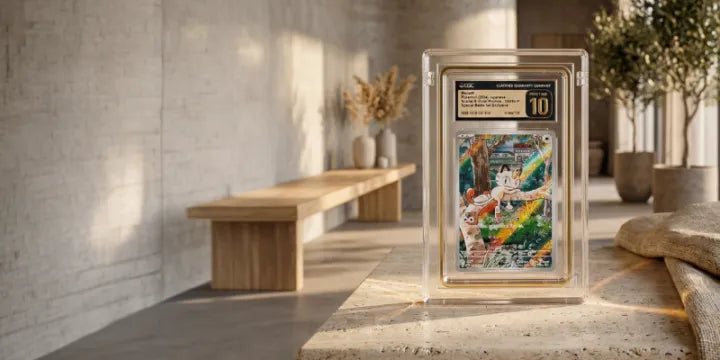
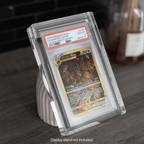
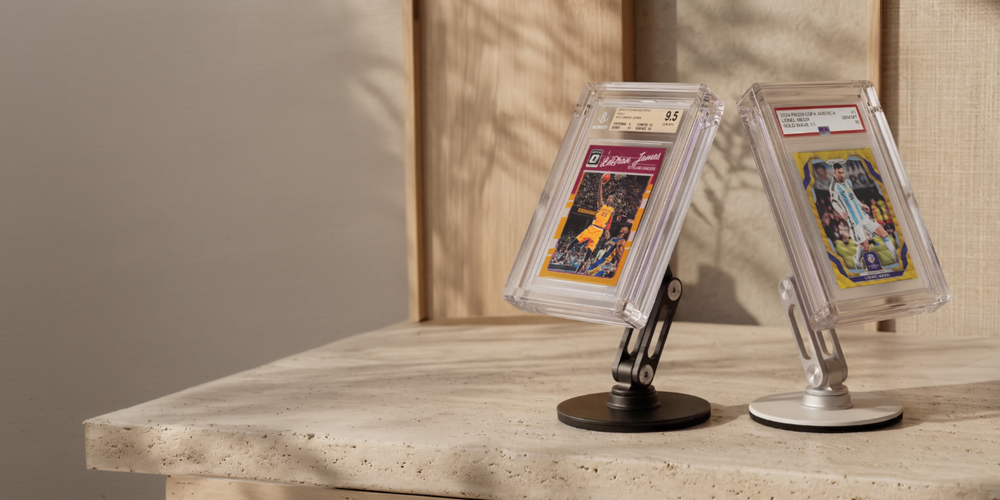
Graded cards are an investment, display them like one. Phantom Display cases are engineered with premium acrylic and neodymium magnetic closure, designed for PSA, BGS, CGC, and SGC slabs. Rated 4.7/5 for quality by collectors.
Shop the Ultra Display Case →Which Service Should You Choose for Modern Pokemon Cards?
PSA represents the optimal choice for most modern Pokemon cards, with the service showing strong performance across virtually every Pokemon set from Base Set through current releases. Modern Pokemon collectors have embraced PSA's grading standards and red label aesthetic.
PSA Value tier costs $32.99 per card making it accessible for modern Pokemon submissions. The service provides comprehensive authentication and condition assessment that the Pokemon market consistently rewards with higher resale values.
BGS makes sense for modern Pokemon only when targeting ultra-premium cards likely to achieve Black Labels. Cards with exceptional centering and flawless surfaces might justify BGS Standard tier at $34.95, but most modern Pokemon perform better financially through PSA grading.
For Pokemon investors, PSA's population reports provide better market transparency and pricing guidance. PSA's larger submission volumes create more comprehensive data for making investment decisions about modern Pokemon cards.
Which Service Should You Choose for Vintage Sports Cards?
Vintage sports cards present the most complex grading decision since both services offer distinct advantages depending on card value and target market. High-value vintage often benefits from BGS's detailed subgrade analysis that helps justify premium prices to serious collectors.
BGS Base tier at $14.95 offers significant cost savings for vintage cards where you are primarily seeking authentication rather than maximum resale premiums. The extended turnaround of 75+ business days typically does not impact vintage card values since these are not time-sensitive investments.
PSA wins the vintage market on liquidity. When you need to sell quickly, PSA-graded cards move faster on every major platform. eBay buyers search "PSA" first, auction houses feature PSA cards prominently, and card shops reference PSA price guides. This liquidity premium grows more valuable as card values increase.
PSA also carries stronger authentication credibility with high-value vintage cards where forgeries and alterations present real risks. Their track record with detecting trimmed cards, color alterations, and complete fakes gives buyers confidence to bid aggressively on expensive lots.
PSA makes the most sense for vintage cards targeting broader collector markets or when quick turnaround matters. PSA Super Express with seven business days serves collectors needing fast authentication for immediate sale opportunities.
How Do Grading Turnaround Times Affect Your Investment Strategy?
Turnaround times directly impact investment returns by affecting when you can realize gains from card appreciation, with PSA Value Bulk requiring 95 business days affecting immediate liquidity options. Market timing can significantly influence final sale prices, making service speed a crucial factor in grading decisions.
PSA's longer turnaround times work best for long-term investment strategies where immediate liquidity is not necessary. Extended processing means your cards remain unavailable for months, which could impact selling opportunities during market peaks.
BGS offers more predictable timelines, with Base tier requiring 75+ business days. This consistency helps with portfolio planning and timing market entry points more effectively than variable processing schedules.
Express services from both companies sacrifice cost efficiency for speed. BGS Priority at $124.95 provides faster service but dramatically impacts ROI calculations for most card values. Only high-value cards justify express pricing when market timing matters significantly.
FAQ
Does BGS or PSA add more value to Pokemon cards? PSA typically adds more value to Pokemon cards across all eras, with PSA perfect grades consistently showing strong performance in the Pokemon market compared to equivalent BGS grades. The Pokemon community has embraced PSA grading standards.
Are BGS Black Labels worth more than PSA 10s? Yes, BGS Black Labels typically command premiums over PSA perfect grades of the same card, though premiums vary by card type. The premium is most pronounced on high-end vintage cards where condition scrutiny matters most.
Which grading service has better resale value for vintage cards? BGS often provides better resale value for high-end vintage cards where condition scrutiny justifies detailed subgrades. PSA performs better for mid-tier vintage targeting broader collector markets.
When do BGS subgrades actually justify a higher price? When a card has at least 2-3 attributes likely to score perfect 10 subgrades, BGS becomes the stronger ROI choice. The subgrade transparency tells a compelling condition story that justifies premium pricing to serious buyers. Cards with obvious flaws are better served by PSA's single-grade presentation.
How much does BGS vs PSA grading cost including all fees? BGS ranges from $14.95-$124.95 per card plus shipping and potential subgrade fees ($3 per 10 subgrade). PSA costs $24.99-$299 per card plus shipping. BGS offers lower entry-level pricing, while PSA provides better value for most modern cards where market premiums offset higher fees.
Which service is better for cards worth over $1,000? For most high-value cards, PSA's market acceptance adds hundreds to final sale prices, making their higher fees worthwhile. The exception is vintage cards in exceptional condition where BGS Black Label potential could justify BGS submission, as Black Labels on iconic cards consistently outperform PSA 10 equivalents.
Should I use BGS or PSA for modern sports rookies? PSA dominates modern sports rookies due to broader collector recognition and social media influence. BGS only makes sense for modern cards in truly exceptional condition where perfect subgrades could push sale prices above PSA 10 equivalents.
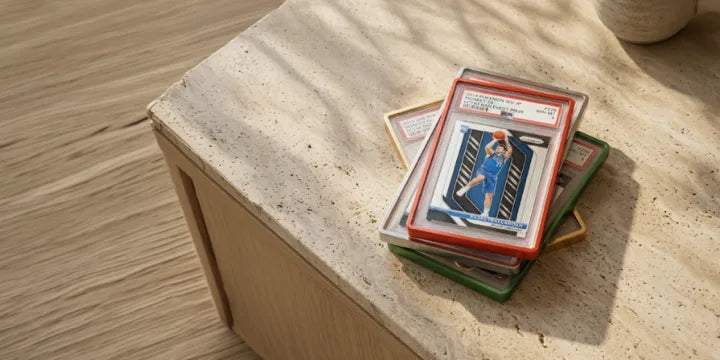
Once your cards return in those coveted slabs, they deserve proper display protection. The Magneto ($55-$60) offers museum-grade protection with magnetic mounting that celebrates your premium graded cards without risking damage from handling. For ultimate protection of your highest-value graded cards, consider GradedGuard Cases which provide tamper-evident security and crystal-clear visibility for your most prized submissions. Browse display cases for PSA slabs and BGS slabs.