






Michael Jordan Card Values 2026: Ultimate Investment Guide
A 1997-98 Upper Deck Game Jersey autographed Michael Jordan card sold for $2.7 million in 2021. That's not a typo. We're talking about a single basketball card worth more than most people's houses. Yet for every million-dollar MJ card making headlines, there are dozens of six-figure sales happening quietly in the background.
After handling thousands of Jordan cards over the years, from raw Fleer rookies that could go either way to pristine Star Company gems, we've watched this market evolve from hobby curiosity to legitimate alternative asset class. The difference between a $50,000 card and a $500,000 card often comes down to understanding exactly what drives value in the MJ market.
Which Michael Jordan Cards Command the Highest Values?
The highest-value Michael Jordan cards are dominated by ultra-rare inserts and pristine rookie cards, with PSA 10 examples selling for $910,000 and numbered game-worn jersey cards reaching multi-million dollar territory. The 1997-98 Metal Universe Precious Metal Gems Green leads the market due to its production run of just 10 copies.
Here are the cards commanding the highest prices as of February 2026:
The Million-Dollar Tier
1997-98 Upper Deck Game Jersey Autograph takes the crown at $2.7 million for a graded example. This card combines three holy grails: game-worn material, on-card autograph, and serial numbering to 25 copies. The version that sold was graded NM 8 and is #21/25 according to auction records.
1997-98 Metal Universe Precious Metal Gems Green #23 represents the ultimate scarcity play. With only 10 copies produced, a BGS 8.5 example sold for $1.02 million in November 2023. A PSA 10, if one surfaces, would likely shatter the $2 million barrier.
1997-98 Metal Universe Precious Metal Gems Red offers slightly more supply than its Green counterpart but still commands huge premiums. A PSA 8 sold for over $500,000 in March 2024, proving that even lower grades of ultra-rare cards outperform most PSA 10 commons.
The Six-Figure Elite
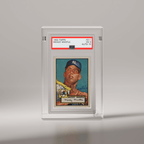
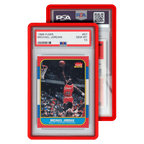
1986-87 Fleer #57 Rookie remains the most recognizable Jordan card. The PSA population data reveals that perfect examples command premium prices, with only about 2% of submitted copies earning that perfect grade. PSA 9 examples trade around $100,000-$150,000, showing how brutal the grade sensitivity is.
1984-85 Star Company #101 gets overlooked because it's technically pre-rookie year, but serious collectors know this is Jordan's first mainstream card. High-grade examples show strong auction results based on their historical significance and limited surviving population.
1997/98 Metal Universe #23 standard version provides another ultra-rare option. With only 100 copies made, a graded example sold for $915,000 at auction.
What Makes Michael Jordan Cards So Valuable?
Michael Jordan cards derive value from athletic dominance, cultural impact, and market scarcity that no other athlete has matched. Jordan transcended basketball to become a global icon, while the timing of his career coincided with explosive growth in card production and collecting culture during the 1990s.
The foundation starts with Jordan's statistical dominance: six NBA championships, five MVP awards, fourteen All-Star selections. But numbers alone don't create $2.7 million cards. Jordan's cultural impact, from Space Jam to Nike's Air Jordan brand, keeps him relevant to new generations of collectors who never saw him play.
Scarcity multiplies that cultural demand exponentially. The Fleer set had a relatively small print run compared to later years, and most copies were handled by kids who had no concept of preservation. Finding high-grade examples becomes increasingly difficult as the supply gets locked up in collections.
Timing played a crucial role too. Jordan's career peaked during the "junk wax" era when manufacturers printed millions of cards, but the truly valuable Jordan cards come from either before that boom (1984-85 Star) or from ultra-premium inserts during it (1997-98 Precious Metal Gems). The sweet spot combines Jordan's peak popularity with genuinely limited production.
Greading companies transformed the market by creating objective scarcity tiers. A raw Fleer Jordan might be worth thousands depending on condition arguments. That same card in a PSA 10 holder removes all doubt and commands six-figure premiums. The holder doesn't just authenticate, it creates a standardized commodity that institutions and investors can trade confidently.
For those looking to compare Jordan's market performance against other record-breaking sports cards, his dominance becomes even more impressive when viewed alongside other legendary athletes.
How Much Does Grading Impact Michael Jordan Card Values?
Grading creates massive value multipliers for Michael Jordan cards, with PSA 10 examples typically selling for 5-15x more than PSA 9 copies of the same card. The Fleer rookie demonstrates this most dramatically, PSA 9s trade around $100,000-$150,000 while PSA 10s command $700,000-$900,000, representing a 6x premium for one grade level.
This grade sensitivity stems from how few Jordan cards achieve perfect grades. The auction data shows that most Jordan rookies suffer from centering issues, print defects, or handling damage. When you're dealing with 35+ year old cardboard that was originally sold in wax packs to kids, finding pristine examples becomes an exercise in statistics.
For investment purposes, the grade cliff creates both opportunity and risk. A raw Fleer Jordan in apparent mint condition might seem like a lottery ticket, but if it comes back PSA 9 due to a slight centering issue invisible to the naked eye, you're looking at a massive value difference versus the 10.
BGS (Beckett Grading Services) adds another layer with subgrades that can actually boost values beyond PSA in some cases. A BGS 9.5 with 10 subgrades often trades closer to PSA 10 money than BGS 9.5 money, because the subgrades provide more granular condition information. For collectors considering Beckett grading, understanding how subgrades impact Jordan card values is essential.
The grading premium extends beyond just rookies. Even modern Jordan inserts show dramatic grade sensitivity. That $500,000 Red Precious Metal Gems was "only" a PSA 8, imagine what a PSA 10 would bring.
Protect Your Graded Investment
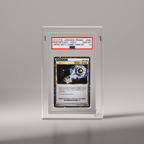
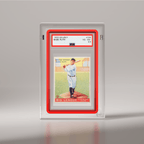
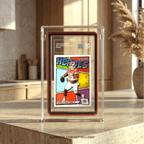
Graded cards are an investment, display them like one. Phantom Display cases are engineered with premium acrylic and neodymium magnetic closure, designed for PSA, BGS, CGC, and SGC slabs. Rated 4.7/5 for quality by collectors.
Shop Graded Card Display Cases →Are Michael Jordan Cards Still a Good Investment?
Michael Jordan cards remain strong long-term investments due to sustained cultural relevance, finite supply, and institutional adoption of sports cards as alternative assets, though buyers should expect more modest returns than the explosive 2020-2021 period. The cards have proven resilient during market corrections while maintaining liquidity at high price points.
The fundamentals supporting Jordan card values haven't changed. His cultural footprint continues expanding, Netflix's "The Last Dance" introduced Jordan to younger demographics, while Nike's Jordan Brand generates billions annually. Unlike many sports figures whose relevance fades with retirement, Jordan becomes more mythical with time.
Supply constraints create a natural floor. High-grade Jordan rookies aren't being manufactured anymore, and the existing supply gets steadily absorbed into long-term collections. Sports Card Investor tracks over 5,000 different Michael Jordan cards, but the truly valuable ones represent a tiny fraction of that universe.
Institutional interest provides new price support that didn't exist historically. Investment funds, wealth managers, and fractional ownership platforms now include sports cards in alternative asset allocations. This institutional demand operates on different timelines and risk tolerances than individual collectors.
However, expectations need calibration. The 2020-2021 card boom created unsustainable price levels for many cards. Jordan's elite pieces held their value better than most, but don't expect another 10x run in the next few years. Think 5-10% annual appreciation for blue-chip Jordan cards rather than moonshot returns.
The key is buying the right cards. PSA 10 rookies and ultra-rare inserts have institutional demand and proven liquidity. Raw cards and lower grades carry more risk but offer higher potential returns for those willing to navigate authentication and grading uncertainty.
How Do You Authenticate and Protect High-Value Michael Jordan Cards?
Authentic high-value Michael Jordan cards require professional grading through PSA, BGS, or SGC for both authentication and protection, as counterfeits of expensive Jordan cards are increasingly sophisticated and can fool even experienced collectors. Raw cards over $10,000 should never be purchased without plans for immediate professional authentication.
Counterfeiters target Jordan cards specifically because of their values. Fake rookies flood online marketplaces, ranging from obvious reprints to sophisticated forgeries that mimic original card stock and printing techniques. Red flags include prices too good to be true, sellers with limited feedback, poor-quality images that hide details, and reluctance to provide additional photos.
Authentication goes beyond just spotting fakes. Even legitimate Jordan cards can have condition issues that dramatically impact value. Trimmed edges, color restoration, or surface alterations aren't always visible to untrained eyes but show up under professional examination.
Grading companies use advanced authentication techniques including UV lights, magnification, and databases of known counterfeits. PSA and BGS guarantee their authentication, providing legal recourse if a card later proves fake. This guarantee protection alone justifies grading costs for expensive Jordan cards.
Storage becomes critical once you've verified authenticity. Climate control prevents warping and humidity damage. UV protection stops color fading that could cost thousands in value. Magnetic holders provide secure display without adhesive contact that could damage the card surface.
Insurance requires special consideration for high-value cards. Standard homeowner's policies typically cap collectibles coverage at low amounts. Dedicated collectibles insurance through companies like Collectibles Insurance Services provides agreed-value coverage that accounts for market appreciation.
Where Should You Buy and Sell Valuable Michael Jordan Cards?
The best venues for buying and selling valuable Michael Jordan cards are established auction houses like Goldin, Heritage Auctions, and PWCC for six-figure pieces, while mid-tier cards ($5,000-$50,000) can be safely traded through reputable dealers and verified online platforms. eBay works for lower-value cards but becomes problematic above $25,000 due to payment processing and dispute resolution limitations.
Auction houses provide the most transparent price discovery for elite Jordan cards. Bidding competition drives true market values, especially for rare pieces where comparable sales data is limited. Houses like Goldin specialize in sports cards and understand grading nuances that generalist auction houses might miss.
Heritage Auctions offers the largest collector base and detailed catalog descriptions that help establish provenance. Their photography standards and condition reporting set industry benchmarks. For sellers, Heritage's marketing reach justifies their commission structure on high-value pieces.
PWCC focuses specifically on trading cards and operates both auction and direct sale formats. Their authentication standards are rigorous, and they've built strong relationships with institutional buyers who drive prices on premium Jordan cards.
Private dealers excel for specific chase cards or when timing doesn't align with auction schedules. Established dealers like COMC, Dave & Adam's, or regional specialists often have direct relationships with collectors looking for particular Jordan cards. The key is working with dealers who have long-term reputations and guarantee authenticity.
eBay remains viable for mid-tier Jordan cards but becomes problematic above $25,000. Payment processing limits, dispute resolution challenges, and authentication concerns make eBay unsuitable for truly expensive cards. The platform's buyer protection policies also favor buyers in disputes, creating seller risk.
Consignment through local card shops works for regional markets but lacks the reach needed for maximum Jordan card values. A shop in Phoenix might have clients interested in lower-value Jordan cards but probably lacks buyers for six-figure pieces.
FAQ
What is the most expensive Michael Jordan card ever sold?
The most expensive Jordan card ever sold is a 1997-98 Upper Deck Game Jersey Autograph that brought $2.7 million in 2021. This card features game-worn jersey material, an on-card autograph, and is numbered to just 25 copies, making it the ultimate Jordan collectible.
How much is a 1986 Fleer Michael Jordan rookie card worth?
A 1986 Fleer Michael Jordan rookie card ranges from $3,000-$900,000 depending on condition and grade. PSA 10 examples sell for $700,000-$900,000, PSA 9s trade around $100,000-$150,000, and lower grades or raw cards can be found for significantly less.
Should I grade my Michael Jordan cards before selling?
You should definitely grade valuable Michael Jordan cards before selling, as grading typically increases value significantly and provides buyer confidence. However, only grade cards you believe could achieve PSA 8 or better, the grading cost isn't justified for cards likely to grade poorly.
What's the difference between 1984 Star Jordan cards and 1986 Fleer?
The 1984-85 Star Jordan cards are technically his first cards but were produced by a smaller company with limited distribution, while 1986-87 Fleer #57 is his mainstream rookie card with wider recognition and liquidity. Star cards can be more valuable in high grades but are harder to sell.
How can I protect my valuable Michael Jordan cards from damage?
Protect valuable Michael Jordan cards by keeping them in graded holders when possible, storing them in climate-controlled environments away from direct sunlight, using acid-free storage materials for raw cards, and maintaining proper insurance coverage. Avoid handling raw high-value cards unnecessarily.
Once you've invested in premium Jordan cards, they deserve display solutions that match their value. Our professional display cases ensure your cards are protected while being showcased, and our Magneto UV-protective display case was engineered specifically for high-end graded cards, magnetic mounting eliminates handling risk while UV-filtering acrylic prevents fade damage that could cost you thousands. For free-standing display, the Phantom Ultra delivers the same 10mm crystal acrylic protection without wall mounting. Professional collectors trust museum-grade protection for their six-figure Jordan cards.