













A single surface scratch visible only under magnification can drop your potential PSA 10 to a PSA 9 — and cost you thousands in resale value. Most collectors submit cards hoping for the best, but PSA's graders follow documented standards that you can learn and prepare for. Understanding exactly what PSA looks for during evaluation gives you a massive advantage before you pay that submission fee.
PSA uses a 10-point grading scale to evaluate every card that crosses their grading room tables. Since launching in 1991, they've become the gold standard for card authentication and grading. But their standards aren't mysterious — they're documented, measurable, and learnable. Since 2018, PSA has graded tens of millions of cards, creating the largest database of card condition standards in the hobby.
What Are PSA's Official Grading Standards for Trading Cards?
PSA evaluates every card using four primary criteria: surface quality, centering measurements, corner condition, and edge integrity on their established 10-point scale. A PSA Gem Mint 10 card must have centering within 55/45 percent on the front and 75/25 percent on the reverse, with flawless surface and sharp corners.
The 10-point scale breaks down into distinct categories that every collector should memorize. A PSA 10 represents the pinnacle — a card with perfect centering, sharp corners, smooth edges, and a flawless surface. PSA 9 cards show minor imperfections that keep them from perfection but still command premium prices.
PSA Mint 9 cards must have centering of approximately 60/40 or better on the front and 90/10 or better on the reverse. As grades decrease, the tolerances become more forgiving. A PSA NM-MT 8 card must have centering of approximately 65/35 or better on the front, while PSA EX 5 cards can have centering up to 85/15 on the front.
PSA's current grading scale uses full grades from 1 to 10, with each grade having specific condition requirements. This system provides clear benchmarks that collectors can study and understand before submitting cards for evaluation.
How Does PSA's Quality Control Process Actually Work?
PSA's quality control involves multiple graders examining each card independently, with senior graders reviewing questionable calls and authentication specialists verifying legitimacy through documented multi-step verification procedures. Cards move through systematic evaluation stations designed to catch both condition issues and authentication concerns.
The process starts when your cards arrive at PSA's facilities. Each submission gets logged into their system with photos taken for their records. Cards then move to the grading floor where trained professionals examine them under specialized lighting and magnification equipment.
Graders use consistent lighting setups and magnifying tools to spot defects invisible to the naked eye. They measure centering with precision tools, examine surfaces for printing defects versus handling damage, and assess corner wear patterns. When graders disagree on a card's condition, it moves up the chain to more experienced evaluators for final determination.
Authentication runs parallel to grading. PSA's authentication team checks for counterfeits, reprints, and alterations using techniques developed over decades of handling cards. They maintain databases of known fakes and printing variations that help identify problem cards. The final step involves encapsulation in PSA's tamper-evident holders with unique certification numbers that can be verified through their online database.
What Surface Defects Will Automatically Lower Your PSA Grade?
Print lines, surface scratches, indentations, staining, and wax buildup are the most common surface defects that prevent cards from achieving PSA 9 or 10 grades. Even microscopic scratches visible only under magnification can drop a card from potential PSA 10 status to PSA 9 territory.
Surface evaluation requires understanding the difference between printing defects and post-production damage. Print lines that occurred during manufacturing might not hurt a grade as severely as scratches from handling. PSA graders learn to identify factory defects versus collector damage through extensive training and experience with thousands of cards.
Common surface killers include fingerprint residue that creates visible smudging, indentations from being pressed against other cards, and scratches from poor storage conditions. Even cards that look perfect to collectors often show surface imperfections under PSA's specialized grading lights that reveal defects invisible under normal viewing conditions.
Wax staining from pack storage can create permanent surface discoloration that significantly impacts grades. This appears as dark spots or streaking that penetrates the card's surface coating. Similarly, rubber band damage creates permanent indentation lines that immediately disqualify cards from high grades. Ink transfer from other cards creates surface staining that's impossible to remove without damaging the card further.
How Do Centering Standards Differ Between Card Types and Eras?
Vintage cards receive more lenient centering tolerances than modern issues, with some older cards achieving PSA 9 grades despite centering that would earn modern cards much lower ratings. PSA recognizes that older printing technology couldn't achieve the precision of current manufacturing processes when establishing grade expectations.
Modern cards face stricter centering requirements because printing technology improved dramatically over decades. A Michael Jordan rookie card from the mid-1980s might receive favorable treatment for centering issues that would devastate a recent Topps Chrome card's grade. This reflects realistic expectations based on each era's manufacturing capabilities and industry standards.
PSA's grading data reveals clear era-based success patterns. 90% of Ultra-Modern Sport cards (2017-present) and Modern TCG cards (2003-present) have graded at PSA 8 or higher, partly because modern printing produces better-centered cards. Compare this to 80% of Modern Sport cards (1986-2016) grading at PSA 8 or higher, while 80% of Vintage TCG cards (pre-2003) achieve PSA 7 or higher grades.
Japanese cards often receive different treatment due to cultural printing standards that prioritized different aspects of card quality. Some Japanese manufacturers focused more on surface quality than perfect centering, which PSA considers in their evaluations. Understanding these era-specific standards helps collectors set realistic grade expectations before submission and avoid disappointment with results.
What Corner and Edge Issues Does PSA Consider Most Serious?
Sharp corner damage, edge chipping, and rough cuts are the most severe corner and edge defects in PSA's evaluation system, with even minor corner softening visible only under magnification preventing cards from achieving PSA 10 status immediately. Corner integrity represents one of the four pillars of PSA's grading methodology.
Corner evaluation focuses on sharpness and structural integrity. PSA 10 corners must appear sharp and intact from all angles under magnification. The slightest rounding or fraying drops cards into PSA 9 territory immediately. Corner damage typically occurs from handling, storage in tight spaces, or manufacturing issues during the cutting process.
Edge assessment examines the card's perimeter for roughness, chipping, or uneven cutting. Factory cuts that appear rough can hurt grades even when the damage isn't from collector handling. PSA graders distinguish between manufacturing edge issues and post-production damage when possible, though both factors affect final grades significantly.
Layering problems where the card's face separates from its backing create edge defects that severely impact grades. This appears as white showing along card edges where the layers don't align properly. Such damage often results from humidity exposure or poor storage conditions over time. Corner creases represent the worst type of corner damage, often resulting in grades of PSA 6 or lower regardless of other condition factors.
Which Printing Defects Can PSA Distinguish from Damage?
PSA graders can identify factory print lines, color registration issues, and cutting variations as manufacturing defects rather than collector damage, though these still impact final grades. Understanding this distinction helps collectors set realistic expectations for cards with visible imperfections that occurred during production rather than handling.
Factory defects include print lines that appear as thin lines across the card surface, created during the printing process when machinery malfunctions or ink doesn't flow properly. Color registration problems occur when different ink layers don't align perfectly, creating blurry images or color bleeding effects. These defects happened at the factory, not in your collection.
Cutting variations affect card dimensions and edge quality. Some cards came from the factory with slightly rough edges or dimensional variations that PSA recognizes as manufacturing issues. However, this doesn't mean such cards receive perfect grades — factory defects still hurt condition ratings, just typically less severely than collector damage.
PSA's experience with millions of cards helps graders identify patterns typical of specific manufacturers, printing runs, and time periods. This knowledge allows them to distinguish between a print line that occurred during manufacturing versus a scratch that happened during handling. The distinction matters for grade determination, though both types of defects prevent perfect 10 grades in most cases.
How Can You Prepare Cards to Meet PSA's Standards Before Submitting?
Proper card preparation starts with careful inspection under bright lighting and magnification using a jeweler's loupe or magnifying glass to identify any defects that might hurt your grade. This 10x magnification reveals surface issues, corner problems, and edge defects invisible under normal viewing conditions.
Handle cards with cotton gloves to prevent fingerprint transfer and oils from contaminating surfaces. Work over a clean, soft surface like a microfiber cloth to prevent accidental drops or scratches during inspection. Remove cards from penny sleeves slowly to avoid creating static that attracts dust particles to the card surface.
Storage condition directly impacts card quality before submission. Keep cards in rigid holders or toploaders to prevent bending and corner damage during transport. Avoid rubber bands, paper clips, or any storage method that applies pressure to card surfaces. Climate control prevents humidity damage that causes edge separation or surface warping over time.
Document your cards with high-resolution photos before submission. This creates a record of condition and helps track any handling damage that might occur during shipping to PSA's facilities. Focus on corners, edges, and surface areas where defects commonly appear under magnification.
Timing submissions strategically can improve your experience and manage costs. PSA Value Bulk tier costs $24.99 per card with a 20-card minimum and 95 business days turnaround. For faster service, PSA Value tier costs $32.99 per card with 75 business days turnaround.
What Should You Expect During PSA's Authentication Process?
PSA's authentication process runs parallel to condition grading and involves specialist teams examining cards for counterfeits, reprints, and alterations using advanced detection methods. Authentication specialists maintain extensive databases of known fakes and printing variations that help identify problematic submissions before encapsulation.
The authentication team examines paper quality, printing characteristics, and card construction to verify authenticity. They look for telltale signs of counterfeiting like incorrect paper thickness, wrong printing patterns, or color variations that don't match legitimate cards from specific sets and years.
Modern authentication techniques include UV light examination that reveals security features or alterations invisible under normal lighting. Some counterfeit cards use different materials that react differently under UV exposure, making detection possible for trained specialists. Authentication also involves checking card dimensions against known specifications for each set.
For valuable vintage cards, PSA may conduct additional authentication steps including paper fiber analysis or comparison against authenticated examples in their reference collection. This process ensures that high-value cards receiving premium grades are legitimate examples worthy of significant collector investment.
Protect Your PSA Investment
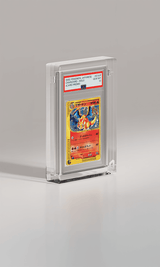
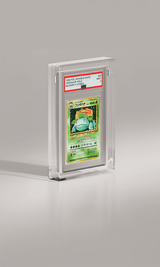
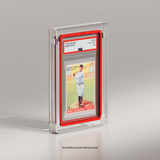
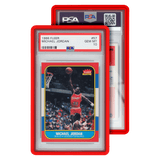
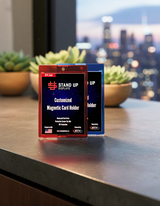
Your graded cards lose value every day they’re exposed to UV light and handling damage. Phantom Display cases are engineered with premium acrylic and neodymium magnetic closure — purpose-built for PSA slabs. Rated 4.7/5 for quality by collectors.
Shop PSA Display Cases →When Do PSA Standards Change and How Are Collectors Notified?
PSA rarely changes fundamental grading standards because modifications would affect their entire population database and established market values throughout the hobby. When changes occur, they typically involve clarifying existing standards or addressing new card types rather than making grades easier or harder to achieve across the board.
Collectors receive notification of standard changes through PSA's official website announcements, email newsletters to registered users, and updates posted on their social media channels. Major changes also get covered by hobby publications and collector forums that track industry developments.
Most updates involve technical clarifications rather than wholesale changes to grade requirements. For example, PSA might clarify how they handle specific types of printing defects or update their authentication procedures for new counterfeit detection. These updates help maintain consistency across their grading operations.
Historical consistency remains a priority for PSA because collectors depend on stable standards when making purchasing and submission decisions. A PSA 9 from years ago should represent similar condition quality to a PSA 9 graded today, maintaining confidence in the certification system.
Once your cards return from PSA in those iconic slabs, they deserve display protection that matches their certified status. Our Magneto display cases were designed specifically for PSA slabs — revolutionary magnetic mounting system, UV protection, and installation in under 30 seconds. No adhesives touching your investment, just museum-quality presentation for your freshly graded cards.
FAQ
How strict are PSA's grading standards compared to other companies?
PSA maintains consistently strict standards across all submissions, with their 10-point scale being more conservative than BGS for surface quality but similar for centering requirements. Most collectors find PSA grades run slightly lower than their personal assessments due to professional grading equipment and training. For a detailed comparison between the two major grading companies, check out our BGS vs PSA guide.
What's the difference between PSA 9 and PSA 10 standards?
PSA 10 requires near-perfect centering (55/45 front, 75/25 back), flawless surface, and sharp corners with no visible defects under magnification. PSA 9 allows minor imperfections like slight centering issues (60/40 front) or tiny surface blemishes that don't detract from the card's overall appearance when viewed normally.
Can PSA's grading standards change over time?
PSA rarely changes fundamental grading standards, as this would affect their entire population database and market values. Changes typically involve clarifying existing standards or addressing new card types rather than making grades easier or harder to achieve across established categories.
How does PSA handle vintage cards differently in their grading standards?
Vintage cards receive more lenient treatment for manufacturing-related issues like centering and cutting variations, recognizing that older printing technology couldn't achieve modern precision levels. However, surface quality and corner condition standards remain consistent across all eras to maintain grading integrity.

