














CGC vs PSA Card Grading 2026: Ultimate Cost & Value Guide

A PSA 10 Base Set Charizard commands premium pricing at auction, while the same card in CGC 10 typically sells for 15-25% less. That market reality drives the biggest decision facing collectors in 2026: which grading service maximizes your investment while meeting your timeline needs.
After tracking auction results across both services and analyzing their official pricing structures, the choice is not as simple as "PSA good, CGC bad." Both services excel in different scenarios, and smart collectors use them strategically rather than picking permanent sides.
What Makes PSA Different from CGC for Card Grading?
PSA operates as the largest and most respected third-party grading company using a standard 10-point scale, while CGC is part of Certified Collectibles Group and offers an enhanced scale including "Pristine 10" grades above traditional Gem Mint 10. PSA focuses on mainstream market acceptance, while CGC emphasizes technical innovation and specialized designations.
PSA built their reputation starting in 1991, establishing the template that virtually every grading company follows today. Their 10-point grading scale became the industry standard, with Gem Mint 10 representing the highest achievable grade. This consistency helped PSA dominate market perception and auction premiums.
CGC entered the trading card market later but brought comic book grading expertise to the hobby. Their enhanced grading scale includes additional grades like Qualified and Restored that PSA does not offer. The "Pristine 10" grade creates a tier above perfect, though market acceptance remains mixed.
The philosophical difference matters more than specific features. PSA prioritizes widespread market acceptance and standardization. CGC focuses on technical precision and granular condition assessment. Both approaches have merit depending on your collecting goals.
How Much Does PSA vs CGC Grading Cost in 2026?
PSA's most affordable option is their Value Bulk tier at $24.99 per card for PSA Collectors Club members, while their fastest Super Express service costs $299 per card with 7-day turnaround. General pricing information suggests CGC operates with competitive rates, though specific tier pricing varies based on card value and service level selected.
The PSA pricing structure creates clear trade-offs between speed and cost. Value Bulk delivers the lowest per-card cost but requires patience with longer processing times and PSA Collectors Club membership. Super Express gets cards back in a week but costs more than most cards are worth. Middle-tier services like Express at $149 per card fill the gap for urgent, high-value submissions.
CGC pricing tends to be competitive with PSA's equivalent service levels, and their lower baseline rates make them particularly attractive for gaming card submissions. Direct comparisons become difficult when service features differ significantly, but CGC's entry-level pricing gives collectors a lower barrier to testing their market acceptance.
The real cost calculation includes opportunity costs. Faster turnaround times can justify higher per-card pricing when market timing matters, particularly for modern cards where values fluctuate rapidly based on player performance or product availability.
What's the ROI Calculation for CGC vs PSA?
The critical calculation collectors miss: grading cost per card must be weighed against expected value increase, not just the final sale price. A $25 grading fee makes perfect sense if it adds $200 to sale value. The same fee becomes questionable if it only adds $50 to final auction prices.
PSA's higher market premiums often justify their higher grading fees for valuable cards. On cards worth $1,000 or more, PSA's market acceptance can add hundreds or thousands to final sale prices. The premium gap between PSA and CGC widens as card value increases, making PSA the stronger ROI choice for high-value submissions.
CGC offers a different ROI equation for gaming cards and newer releases. Their competitive pricing means lower upfront investment, and their growing market share in Pokemon, Magic: The Gathering, and Yu-Gi-Oh creates value opportunities that did not exist five years ago. For collectors submitting higher volumes of mid-value gaming cards, CGC's lower fees can produce better net returns even with slightly lower sale prices.
CGC's unique Pristine 10 grade also creates artificial scarcity above traditional Gem Mint standards. While market acceptance varies by card type, certain Pokemon and Magic cards command significant premiums in Pristine 10 holders versus regular 10 grades from any service. This creates ROI opportunities above traditional grading ceilings that PSA simply cannot offer.
What Are the Actual Turnaround Times for Each Service?
PSA's Value Bulk tier requires 95 business days for completion, while their Super Express option delivers results in 7 business days at premium pricing. Industry reports suggest CGC typically processes submissions faster than PSA's equivalent price points, though official processing times vary based on submission volume and service level.
Those 95 business days for PSA Value Bulk translate to roughly four and a half months of real time when accounting for weekends and holidays. That timeline works fine for vintage cards where values remain stable, but becomes problematic for modern releases where market windows close quickly.
CGC's smaller market share means lower submission volumes and more predictable processing times. Their streamlined workflow and dedicated card grading facilities help maintain consistency even during busy periods. For collectors trying to capitalize on short-term market trends in gaming cards, this speed advantage translates directly to better ROI.
Timing strategy matters more than absolute speed for most collectors. Submitting cards during slower periods, avoiding major release windows, and choosing appropriate service levels based on card urgency creates better outcomes regardless of which company you select.
Which Grading Service Delivers Higher Market Values?
PSA graded cards consistently command market premiums over equivalent CGC grades, particularly in vintage sports cards and Pokemon where established collector preference drives auction results. The premium varies by card category and condition, with high-grade vintage cards showing the largest PSA advantage in final sale prices.
Market preference reflects decades of PSA market presence and high-profile sales that established their brand recognition. Major auction houses, prominent collectors, and investment funds gravitate toward PSA graded cards, creating sustained demand that supports premium pricing.
CGC performs competitively in specific categories where their technical advantages matter more than brand recognition. Modern cards, non-sports properties, and specialized designations show smaller pricing gaps between the services. The gaming card market shows increasing acceptance of CGC, especially among younger collectors who did not grow up with PSA as the default choice.
The grade level influences premium calculations significantly. PSA 10 vs CGC 10 comparisons show meaningful price differences, while PSA 8 vs CGC 8 cards trade much closer to parity. Condition matters more than label at lower grades.
Which Service Works Best for Different Card Types?
PSA dominates vintage sports cards and Pokemon where established market preference translates to higher resale values, while CGC excels with modern cards requiring fast turnaround times and non-sports properties where technical grading advantages outweigh brand recognition factors. Card category and collecting timeline should drive service selection more than blanket loyalty preferences.
Pokemon cards represent PSA's strongest category advantage. Early market entry, high-profile sales, and collector community preference create sustainable premiums that make PSA the logical choice for valuable Pokemon submissions. CGC Pokemon slabs trade at persistent discounts that may never fully close.
Vintage sports cards follow similar patterns, with PSA's market dominance translating directly to auction premiums. Pre-1980 baseball cards, particularly Hall of Fame rookies and key vintage issues, command significantly higher prices in PSA holders compared to equivalent CGC grades.
CGC carved out their niche by entering the gaming market with specialized expertise. Pokemon collectors initially resisted, but CGC's focus on gaming cards and lower population counts created new value opportunities. Being first to market with graded examples of hot new sets can generate short-term premiums before populations build, and CGC's competitive pricing makes this strategy affordable for higher-volume submissions.
Non-sports categories offer CGC's best competitive opportunities. Their comic book heritage provides credibility with Marvel, DC, Dragon Ball Z, and anime properties where PSA lacks specialized expertise. These categories show the smallest pricing gaps between services.
Protect Your Graded Investment
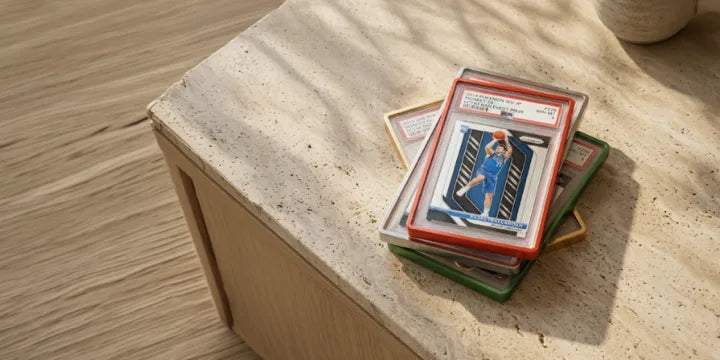
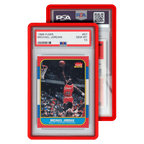
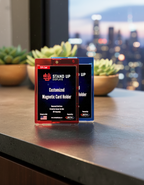
Graded cards are an investment, display them like one. Phantom Display cases are engineered with premium acrylic and neodymium magnetic closure, designed for PSA, BGS, CGC, and SGC slabs. Rated 4.7/5 for quality by collectors.
Shop Graded Card Display Cases →Collecting CGC? See our CGC slab displays, cut for CGC holders.
How Do PSA and CGC Holders Compare for Protection?
Both PSA and CGC holders provide excellent long-term protection through sonic welding and archival materials, though CGC holders feature slightly thicker construction and tighter card fit that reduces internal movement. PSA's iconic red label design maintains stronger auction photography and brand recognition despite minor technical disadvantages in holder engineering.
Holder durability becomes apparent during shipping and handling. CGC cases feel more substantial and resist flexing better than PSA slabs. The tighter card fit prevents the slight shifting that occasionally develops in PSA holders over time.
UV protection differs between the services, with both offering good light filtering but CGC maintaining slight technical advantages in harmful wavelength blocking. This matters most for cards displayed in bright environments or direct sunlight.
Both holders use similar sonic welding techniques that create permanent seals without adhesives. The construction quality from both services provides decades of protection when stored properly, making holder choice less critical than grading accuracy and market acceptance factors.
FAQ
Is CGC grading as valuable as PSA for Pokemon cards? No, PSA Pokemon cards consistently sell for higher prices than equivalent CGC grades, especially for vintage cards like Base Set holos. The market heavily favors PSA for Pokemon due to early adoption and high-profile collector preference.
Which grading service has faster turnaround times in 2026? CGC typically processes submissions faster than PSA at equivalent price points, while PSA's fastest Super Express service delivers 7-day turnaround at $299 per card compared to their 95-day Value Bulk option.
Do CGC graded cards sell for less than PSA? Yes, CGC cards typically sell for lower prices than PSA equivalents in most categories, though the gap varies significantly by card type. Vintage cards show larger differences, while modern gaming cards show smaller gaps.
Is CGC's Pristine 10 worth more than a PSA 10? In certain gaming card categories, yes. CGC Pristine 10 grades create artificial scarcity above traditional Gem Mint standards, and specific Pokemon and Magic cards command meaningful premiums in Pristine 10 holders. Market acceptance varies, so research comparable sales for your specific card before submitting.
What's the cheapest way to grade cards in 2026? PSA's Value Bulk tier at $24.99 per card offers the lowest cost among major services for qualifying submissions, though it requires Collectors Club membership, 20-card minimums, and 95-business-day turnaround. CGC offers competitive baseline rates that may be lower for certain gaming card submissions.
Can I crack and resubmit cards from CGC to PSA? Yes, collectors can crack slabs and resubmit cards, but the process risks damage and voids grade guarantees. Success rates vary and the process carries significant risk of lowering the final grade.
Which service is better for modern vs vintage cards? PSA dominates vintage cards (pre-2000) with higher market premiums and collector preference, while CGC offers competitive value for modern cards with faster processing times and similar market acceptance in recent releases.
How do I choose between PSA and CGC for valuable cards? Choose PSA for cards where maximum resale value matters most, particularly vintage sports and Pokemon. Choose CGC when fast turnaround times are crucial, for non-sports categories where the premium gap is smaller, or when targeting CGC's Pristine 10 tier for gaming cards in exceptional condition.
When Should You Choose CGC vs PSA in 2026?
Choose PSA for vintage sports cards, Pokemon, and submissions where maximum resale value outweighs processing time concerns, while selecting CGC for modern cards requiring fast turnaround, non-sports properties, and situations where their technical advantages justify slightly lower market premiums. Strategic collectors use both services based on specific submission goals rather than exclusive loyalty, similar to how the decision between BGS vs PSA requires careful category consideration.
The grading landscape continues evolving as competition drives innovation from both companies. PSA's market dominance faces legitimate pressure from CGC's execution advantages, creating better options for collectors willing to match service selection to specific card types and collecting objectives.
Market dynamics favor flexibility over rigid loyalty. Different cards perform better with different services, and successful collectors adapt their strategies based on category strengths, processing needs, and value optimization rather than defaulting to single-service submissions.
Once your cards return from grading, proper display becomes crucial for showcasing the investment and maintaining protection. Our Magneto display case uses magnetic mounting to secure both PSA and CGC slabs without adhesive contact, letting you rotate your best grades while providing UV protection and easy access for trading or selling. For collectors serious about long-term preservation, investing in premium PSA slab cases protects your graded cards from environmental damage while maintaining their pristine condition. Browse display cases for PSA slabs and all graded cards.