

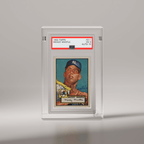
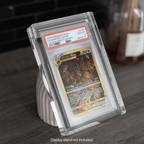
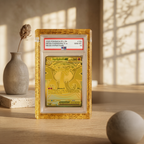
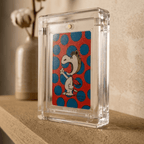




Are PSA Slabs UV Protected? What Collectors Need to Know
Are PSA Slabs UV Protected?
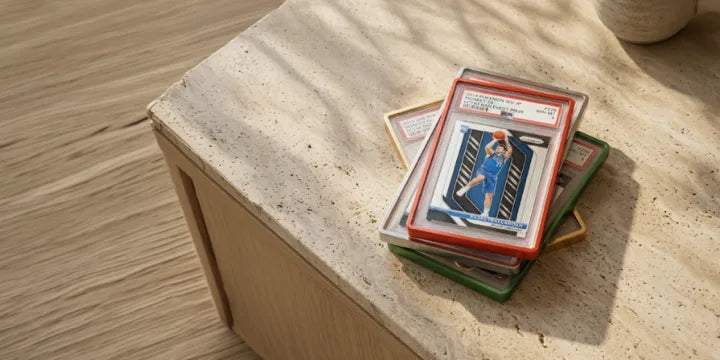
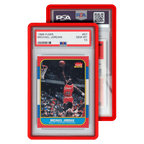
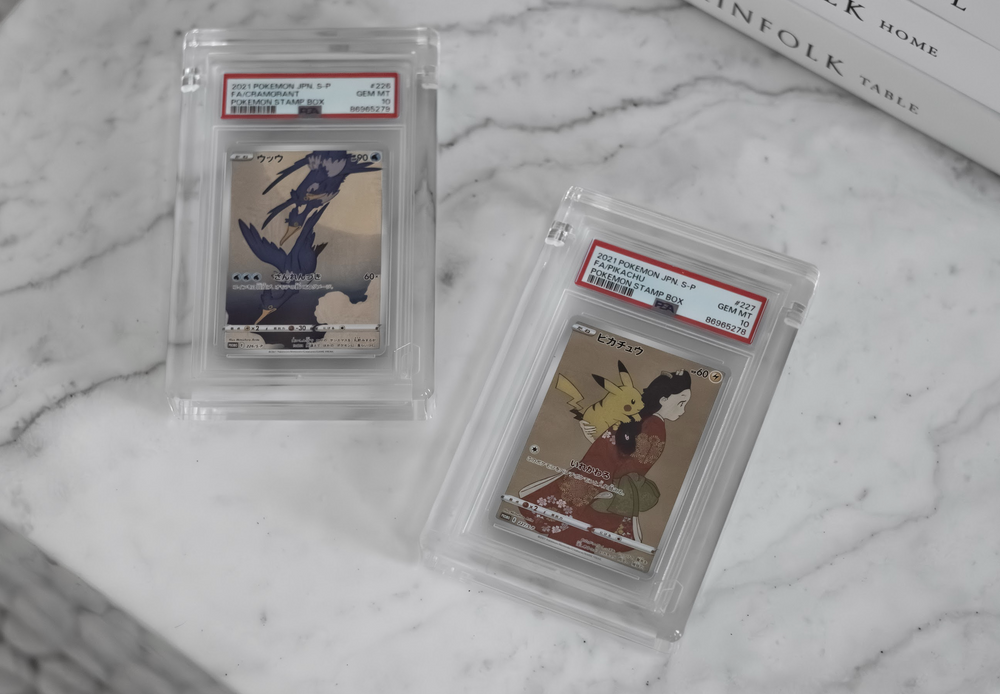
Short answer: not really. PSA slabs are designed to hold and protect your graded card physically. They keep the card sealed, prevent handling damage, and preserve the grade. But they are not engineered to filter ultraviolet light. The plastic used in PSA holders (typically polystyrene or a similar thermoplastic) offers minimal UV resistance. PSA does not publish UV filtering specifications for their slabs, and no major grading company markets their holders as UV-protective products.
That does not mean your cards are in immediate danger. But if you display graded cards near windows, under certain lighting, or in any environment with consistent light exposure, UV degradation is a real, gradual concern.
What UV Light Actually Does to Trading Cards
Ultraviolet radiation breaks down organic dyes and pigments at the molecular level. For trading cards, this means:
- Holographic and foil fading. Chrome, refractor, and holographic surfaces lose their brilliance over time. The reflective layers degrade unevenly, leaving dull patches where vibrant color used to be.
- Ink degradation. Printed colors shift and fade. Reds and yellows are especially vulnerable because the pigments that produce them absorb shorter, higher-energy wavelengths, and that absorbed energy breaks down molecular bonds more aggressively.
- Slab yellowing. The plastic of the slab itself can yellow with prolonged UV exposure. This clouds the case and diminishes the visual appeal of the card inside, even if the card itself is still intact.
- Card stock degradation. Over years, UV exposure can weaken the card stock itself, contributing to brittleness and accelerated aging.
The critical thing to understand: this damage is cumulative and invisible in real time. You will not notice anything day to day. Then one morning, you compare your displayed card against one you kept stored, and the difference is unmistakable. By that point, the damage is permanent and irreversible.
Sealed Is Not the Same as UV Protected
This is the most common misconception among collectors. A card sealed inside a grading slab feels protected. It looks protected. But "sealed" only means the card is enclosed. It says nothing about what wavelengths of light can pass through the enclosure.
Different plastics interact with UV radiation in very different ways:
| Material | UV Resistance | Common Use |
|---|---|---|
| Polystyrene | Low. Transmits most UV wavelengths. | Grading slabs, basic card holders |
| Standard acrylic (PMMA) | Moderate. Blocks some UV, transmits some. | Picture frames, retail displays |
| UV-resistant acrylic | High. Engineered to absorb/block UV wavelengths. | Museum cases, archival displays |
| Glass with UV coating | High. Coating blocks UV transmission. | Framing, museum exhibits |
A PSA slab falls into that first category. It is excellent at physical protection. It is not designed for UV filtration. Expecting a grading slab to block UV is like expecting a phone case to be waterproof: it might help a little, but that is not what it was built for.
What Real UV Protection Looks Like
Museums and archival institutions have spent decades solving this exact problem. When you see a rare manuscript, a vintage photograph, or a priceless artifact on display in a museum, it sits behind material specifically chosen to filter UV radiation while maintaining optical clarity.
Three factors determine how well a display case protects against UV:
- Material composition. UV-resistant acrylic is formulated with additives that absorb ultraviolet wavelengths before they reach the object inside. Standard acrylic and polystyrene lack these additives.
- Thickness. More material between the light source and the card means more UV absorption. A 10mm acrylic wall absorbs significantly more UV energy than a thin 1-2mm slab shell.
- Optical quality. Protection is only useful if the case still looks good. Low-quality UV-filtering materials can introduce haze, tint, or distortion. The best UV-resistant acrylic maintains crystal clarity while blocking harmful wavelengths.
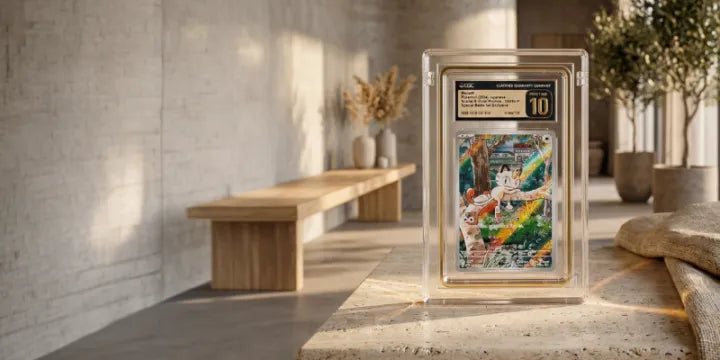
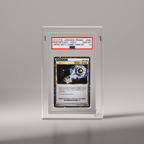
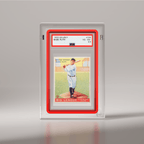
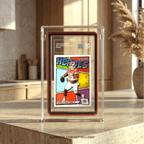
This is the standard Phantom Display builds to. The Phantom Ultra uses 10mm UV-resistant crystal acrylic per side, delivering museum-level transparency with superior UV resistance and industry-leading yellowing resistance. Every case seals with neodymium magnets for a clean, tool-free open and close. No mechanical fasteners, no pressure points on the slab.
How to Protect Your Graded Cards from UV Damage
You have several options, ranging from free to premium. The right choice depends on whether you actually want to see your cards.
Option 1: Store them in a dark place
Zero UV exposure, zero cost. Keep slabs in a closet, safe, or storage box. This is effective protection but defeats the entire purpose of collecting. If you graded a card to look at it, this is not a real solution.
Option 2: Control your lighting
LED lights produce far less UV than fluorescent or halogen bulbs. Keeping cards away from direct sunlight and switching to LED lighting reduces UV exposure significantly. This helps, but does not eliminate the risk entirely, since ambient light still contains some UV.
Option 3: UV-filtering window film
Applying UV-blocking film to windows in your display room cuts a major source of UV exposure. Relatively inexpensive and effective for the room as a whole. The downside: it does nothing if you ever move the cards to a different room, take them to a show, or display them near artificial light sources.
Option 4: Display cases with UV-resistant acrylic
This is the only option that protects the card at the point of display, regardless of the room conditions. The card carries its protection with it. Thick, UV-resistant acrylic wraps the slab in a dedicated barrier that filters UV before it reaches the plastic and card inside.
The Phantom Display PSA collection is built on this principle. Every case uses UV-resistant crystal acrylic and neodymium magnetic closure for a seamless fit around your graded cards. The Ultra line delivers 10mm per side, putting substantial material between your cards and any light source. For a deeper breakdown of how UV damages specific card types, read our full guide: How to Protect Your Cards from UV Damage.
Best practice: combine approaches
The most effective protection layers multiple strategies. Use LED lighting in your display space. Keep cards out of direct sunlight. And house your most valuable slabs in UV-resistant display cases. Each layer reduces cumulative UV exposure, and over years that compounding protection makes a measurable difference.
The Bottom Line
PSA slabs protect your cards physically. They preserve the grade. They prevent handling damage. But UV protection is not part of their design, and PSA does not claim otherwise. If your graded cards sit on a shelf, desk, or wall where light reaches them, UV degradation is a slow, silent risk to both the card and the slab itself.
The good news: protecting against UV is straightforward once you understand the gap. A proper display case with UV-resistant acrylic closes that gap completely, letting you display your collection with confidence instead of worry.
New to PSA grading? Start with our PSA Grading Guide for Beginners, or learn more about choosing the right case for your PSA slabs.
Browse the full PSA slab display collection or explore the Phantom Ultra to see what museum-grade protection looks like.
Protect Your Graded Cards with UV-Resistant Acrylic
Phantom Display cases use UV-protective crystal acrylic to shield your PSA slabs from color fading, preserving holographic finishes and vintage cardstock for years.
Shop PSA Display Cases
Frequently asked questions
No. A standard PSA holder protects against handling and air but is not designed to block ultraviolet light, so a displayed PSA card can still fade.
Seal it in a display made from acrylic chosen for high UV resistance. Phantom PSA slab displays provide superior UV resistance and seal magnetically over the existing holder.
The grade is fixed, but the card's appearance can fade under UV light over time. A UV-safe display case removes that risk while keeping the card visible.
Display your collection
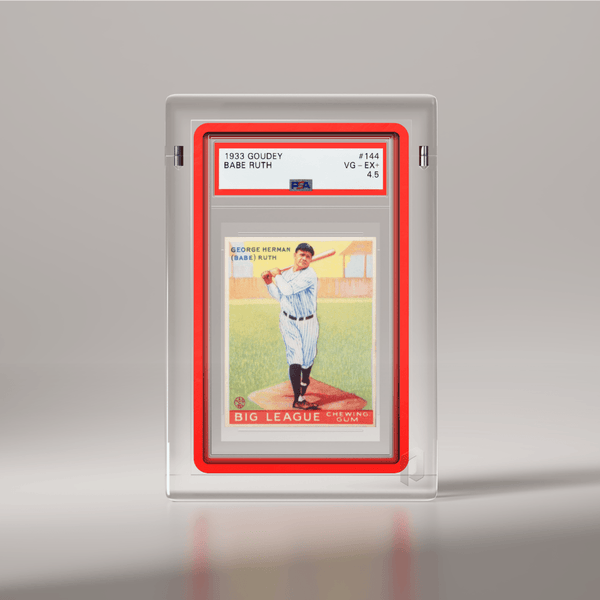
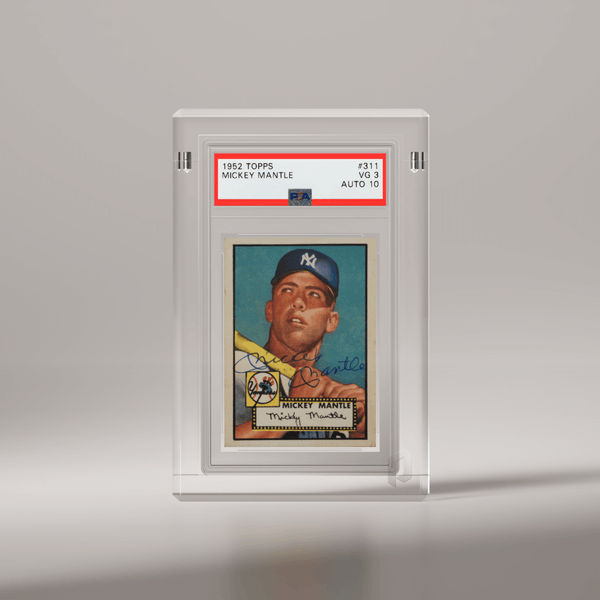
 Protect your graded cardsShop PSA Slab Display Cases →