








PSA Grading Costs 2026: Complete Pricing Guide & Hidden Fees
PSA grading costs jumped 15-30% in 2025, and we're looking at another price increase for 2026. If you're sitting on a stack of raw cards worth grading, the window for current pricing is closing fast. With PSA's September 2025 price updates pushing Value service to $27.99 and Express to $149, collectors need to understand exactly what they're paying for and when it makes financial sense.
We've seen this cycle before. PSA raises prices when demand outstrips capacity, then adjusts service levels to manage workflow. The question isn't whether prices will increase in 2026, it's by how much and which service tiers will see the biggest jumps.
Current PSA Pricing Structure: What You're Actually Paying
PSA's current pricing structure reflects their attempt to balance high-volume submissions with premium services. PSA TCG Bulk costs $18.99 per card with a 65-day turnaround, but this tier caps at $200 declared value per card. For most serious collectors, that's barely enough coverage for modern pulls, let alone vintage cards.
The sweet spot for most collectors sits in the Value tier at $27.99 per card. This covers cards up to $499 declared value with roughly 20-30 business days turnaround. We've found this tier works well for modern high-end pulls, your Charizard alt arts, your Jordan rookies, your first edition holos that aren't quite vintage money yet.
PSA Express service runs $149 per card with 10-day turnaround and $2,500 coverage. This tier makes sense when you need cards back quickly for a show or sale, or when you're dealing with higher-value submissions. The Super Express option at $299 cuts that to 5 days with $5,000 coverage, expensive but sometimes necessary for time-sensitive submissions.
Don't forget shipping costs either. Return shipping for 10-19 items costs $29.99 with $2,000 insurance coverage. Add your initial shipping costs, and you're looking at $40-60 in shipping fees per batch submission.
What's Driving PSA Cost Changes in 2026
PSA's pricing strategy follows simple economics: when demand exceeds capacity, prices rise. We've watched this cycle play out since the 2020 card boom, and 2026 won't be different. PSA processes massive volumes daily, but their Newport Beach facility has physical limits on throughput.
Expect bulk pricing to remain relatively stable, PSA needs volume submissions to maintain workflow efficiency. The recent $22 bulk service for Collector's Club members suggests they're trying to incentivize high-volume submitters while maintaining profitability.
Mid-tier services (Value, Regular) will likely see 10-15% increases. These tiers generate PSA's highest margins while serving collectors who care about both price and reasonable turnaround times. Express and Super Express pricing might actually stabilize or increase minimally, they're already priced high enough to discourage casual use while maximizing revenue per submission slot.
Labor costs continue climbing in California, and PSA's expansion into authentication services means they're spreading overhead across multiple product lines. Insurance costs for handling increasingly valuable cards also factor into pricing decisions.
Choosing the Right PSA Service Tier for Your Cards
Service tier selection comes down to three factors: card value, urgency, and your risk tolerance. PSA's $199 cap per card rule means cards exceeding that declared value automatically bump to higher tiers, plan accordingly.
For modern cards worth $100-400, Value service at $27.99 offers the best cost-to-benefit ratio. You're not paying Express premiums for cards that won't see massive grade premiums, and 20-30 day turnaround is acceptable for most collectors building positions.
Regular service at $74.99 makes sense for cards in the $400-1,000 range where grade really matters. The 15-day turnaround and $1,500 coverage provide good balance between cost and service level. We use Regular for most vintage cards where a PSA 8 vs PSA 9 represents hundreds of dollars in value difference.
Express and Super Express tiers work for two scenarios: time-sensitive submissions and ultra-high-value cards. If you're submitting for a major auction or need cards back before a show, the premium pricing pays for itself through better timing. For cards worth $2,000+, Express service provides appropriate insurance coverage without the extreme cost of Walk-Through.
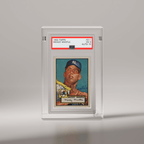
Walk-Through at $599 per card remains the choice for museum-quality cards where any delay costs money. T206 Wagners, 1952 Mantle high grades, Alpha Black Lotus, cards where a week's delay might mean missing a six-figure sale opportunity.
Hidden Costs That Destroy Your Grading Budget
Most collectors focus on per-card grading fees and ignore the extras that inflate total costs by 25-35%. Shipping represents the most obvious additional expense, but PSA's insurance requirements create the real budget killers.
Declared value accuracy matters more than most collectors realize. Under-declare a card's value and PSA won't cover damages. Over-declare and you pay unnecessary tier premiums. Getting this wrong costs money either way. We've seen collectors declare a $300 card at $500 "to be safe" and pay Regular tier pricing instead of Value, $47 extra for zero additional protection.
Packaging costs add up quickly when submitting regularly. Quality card savers, team bags, bubble mailers, and tracking add $3-5 per card in materials and shipping. Factor this into your cost-per-card calculations, especially for lower-value submissions where packaging costs represent 15-20% of total expenses.
Membership fees for PSA Collector's Club ($99 annually) provide bulk pricing access but only make sense if you're submitting 50+ cards yearly. The math works out to roughly $2 per card in membership costs, worth it for serious submitters, wasteful for casual collectors.
Failures and resubmissions represent the hidden cost nobody talks about. Not every card grades as expected, and sometimes you'll want to crack and resubmit for a better grade. Budget 5-10% of your grading volume for resubmissions, especially on borderline high-grade cards.
When PSA Grading Actually Makes Financial Sense
Grading isn't automatically profitable just because PSA 10s sell for premiums. Successful grading requires understanding population reports, grade distributions, and realistic expectations for your cards' condition.
The break-even calculation is straightforward: (Raw card value + Grading costs + Opportunity cost) must be less than Expected graded value. Most collectors skip the opportunity cost calculation, if you're tying up $500 in raw cards plus $150 in grading costs for 30 days, that's $650 earning zero return for a month.
Modern cards offer the best grading ROI when you can identify condition outliers fresh from packs. That Charizard you pulled pack-fresh has better PSA 10 odds than the same card bought raw on eBay. Vintage cards require more expertise, understanding how 40-year-old cardboard ages and what flaws PSA penalizes most heavily.
Cards valued at $499 or more generally justify grading costs because authentication and condition verification become critical at higher price points. Below $200, grading often costs more than the grade premium provides unless you're dealing with condition-sensitive vintage or error cards.
Bulk submissions improve economics significantly. PSA's $22 bulk service brings per-card costs down to reasonable levels for cards in the $100-300 range where individual Value service might not make sense.
Protect Your PSA Investment
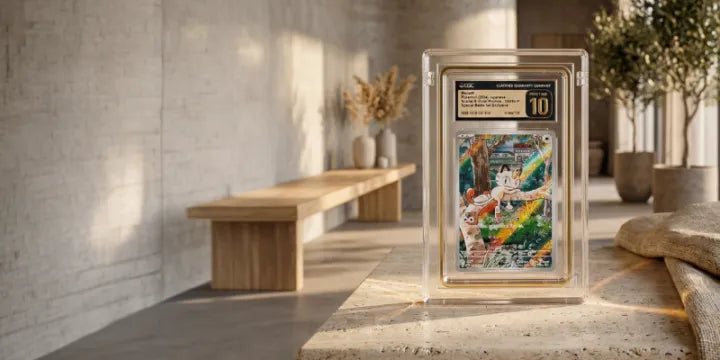
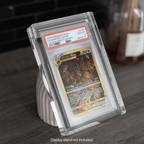
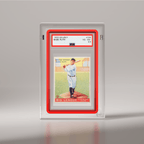
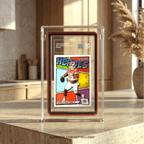
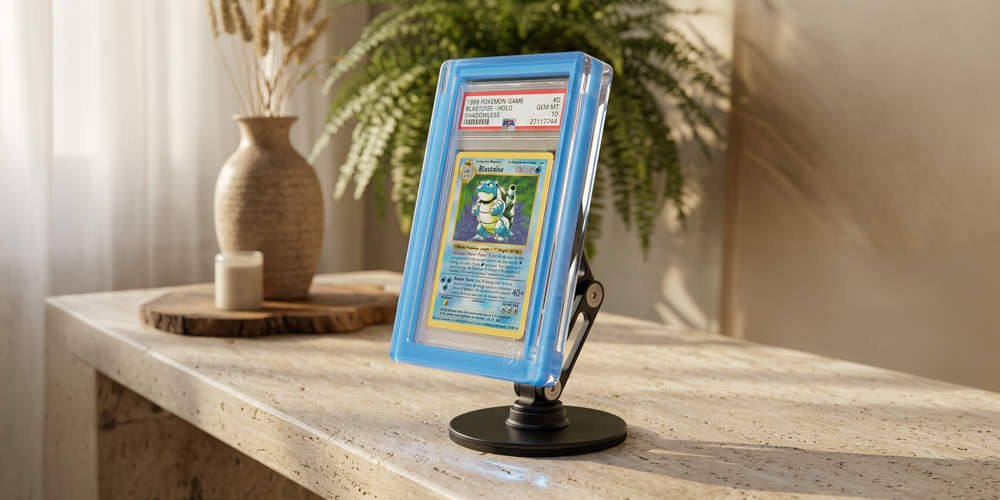
Your graded cards lose value every day they’re exposed to UV light and handling damage. Phantom Display cases are engineered with premium acrylic and neodymium magnetic closure, purpose-built for PSA slabs. Rated 4.7/5 for quality by collectors.
Shop PSA Display Cases →Protecting Your Investment: Why Premium Display Cases Matter
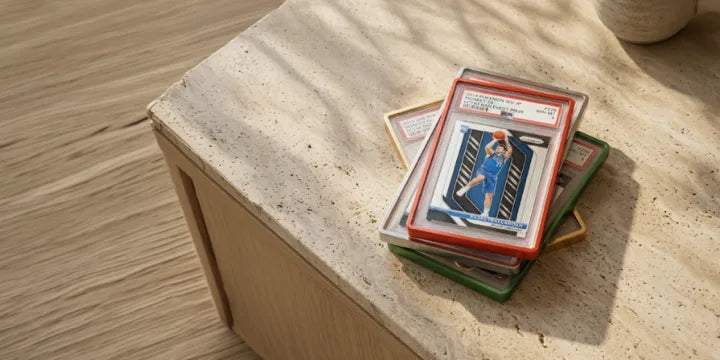
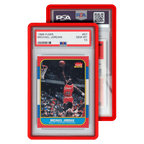
Once PSA returns your cards in those plastic slabs, proper storage and display become critical for maintaining their condition and value. PSA slabs aren't indestructible, we've seen cracked cases, cloudy plastic, and label damage from improper storage destroy thousands of dollars in graded card value.
The irony of spending $50-150 per card for PSA grading, then storing them in cardboard boxes or cheap plastic cases, isn't lost on serious collectors. Your newly graded PSA 10 needs UV protection, stable temperature, and protection from physical damage to maintain its premium over raw cards.
Quality acrylic display cases provide museum-level protection while showcasing your investment properly. UV-resistant acrylic prevents plastic degradation and card fading, which is especially critical for valuable graded cards. Magnetic mounting systems eliminate the pressure points that can crack PSA cases over time. Temperature stability prevents the expansion and contraction that loosens labels.
When you're calculating grading ROI, factor in long-term protection costs. A $2,000 PSA 10 deserves better protection than a $3 plastic case from Amazon. Think of proper display as insurance for your grading investment, you've already spent significant money getting the grade, don't lose it to preventable storage damage.
FAQ
How much will PSA grading cost in 2026? Expected PSA bulk services to remain around $20-25 per card, while Value tier will likely increase to $30-35. Express services may reach $160-175 per card. These estimates assume normal market conditions and PSA's continued capacity constraints. When comparing PSA vs BGS vs CGC vs SGC grading services, PSA typically commands the highest resale premiums despite premium pricing.
What PSA service level should I choose for my cards? Use Bulk ($18.99) for cards under $200, Value ($27.99) for cards worth $200-400, and Regular ($74.99) for cards worth $400-1,000. Express services only make sense for time-sensitive submissions or ultra-high-value cards needing quick turnaround.
Are there hidden fees with PSA grading I should know about? Yes. Shipping costs $30-60 per submission, packaging materials add $3-5 per card, and membership fees run $99 annually for bulk access. Insurance requirements can also bump cards to higher service tiers unexpectedly.
How do PSA costs compare to BGS and CGC in 2026? PSA generally costs 10-20% more than BGS and CGC for equivalent service levels, but PSA grades command higher resale premiums in most categories. The premium is worth it for cards you plan to sell.
What's the best way to protect my graded cards after getting them back from PSA? Invest in UV-resistant acrylic display cases with magnetic mounting systems. Avoid direct sunlight, maintain stable temperatures, and never stack PSA slabs without proper padding between them.
Should I wait for PSA prices to drop or submit my cards now? PSA prices rarely decrease, they typically stay flat or increase. If you have cards ready for grading, submit now rather than waiting for price drops that historically don't happen.
How can I reduce my PSA grading costs through bulk submissions? PSA Collector's Club membership ($99) provides access to bulk pricing at $22 per card with 25-card minimums. The membership pays for itself after submitting about 50 cards annually.
Planning Your 2026 Grading Budget
Successful grading in 2026 requires treating it like any other investment strategy. Set annual budgets, track ROI on completed submissions, and adjust your approach based on results. Most serious collectors should budget $2,000-5,000 annually for grading, depending on their acquisition rate and collection focus.
Prioritize cards with the highest probability of grade premiums. Fresh pulls from recent sets, condition outliers you've identified through careful inspection, and vintage cards in exceptional condition for their age. Avoid grading cards "just to see what they get" unless you're using bulk pricing.
Once your cards return with those coveted PSA 10 labels, they deserve protection worthy of your investment. For collectors looking to display their best graded cards with maximum impact, check out our graded card display ideas guide for inspiration. Our Magneto magnetic display case was designed specifically for PSA slabs, UV protection, secure mounting, and the visual impact your high-grade cards deserve. After spending $150 getting that perfect grade, don't let cheap storage destroy what you've built.