









BGS Card Grading Explained: Scale, Subgrades and Label Colors (2026)
Updated July 2026 with Beckett's current label key, service levels and 2025 grading volumes.
BGS (Beckett Grading Services) grades cards on a 1-to-10 scale and is best known for its four subgrades: separate marks for centering, corners, edges and surface that get printed right on the slab. A card with four perfect 10 subgrades earns the rare Black Label. This guide explains how BGS grading works, what each subgrade and label color means, what the current service levels cost, and when Beckett is the right call.
Understanding the basics of BGS
BGS is known for its meticulous evaluation of trading cards, assigning a numerical grade that encapsulates various aspects of the card's condition. This isn't merely about attributing a score for aesthetic appeal: grading directly impacts a card's financial worth, collectability, and overall desirability in the marketplace.
-
Authentication and fraud prevention
With rampant forgeries and counterfeits circulating in popular card markets, guaranteeing authenticity is a top priority. BGS's team of experts is adept at identifying fakes, ensuring that any card they grade and encapsulate is genuinely what it claims to be. This reassurance alone bolsters buyer confidence, reducing risks for sellers and collectors alike. -
Market value enhancement
Cards with a reliable, professional grading can often command significantly higher prices than their ungraded counterparts. BGS slabs (the protective cases in which graded cards reside) have become a gold standard in many collecting circles. Simply put, if you're aiming to sell or trade a valuable card, having a reputable grade attached can make a massive difference in perceived worth. -
Beckett's storied history
For over 40 years, Beckett has been a presence in the hobby, building its name on price guides and magazines before expanding into autograph authentication and card grading. That long track record is a big part of why a BGS slab carries weight with buyers today.
Diving into the grading process
A successful BGS grading journey follows several precise steps, each designed to ensure thoroughness and fairness.
-
Submission
- Online or in-person: Collectors either submit cards online through BGS's website or via an authorized dealer who handles the process on their behalf.
- Card details: You'll need to supply basic data such as the player name, set, year, and card number. These details help graders confirm that the card matches its designation.
- Declared value: Estimating a card's value is crucial. It influences your insurance coverage during shipping and can determine the service tier you need.
-
Initial inspection
Once your cards reach BGS, graders begin by verifying the authenticity of each submission. This step includes searching for signs of tampering, alterations, or any evidence that a card might be counterfeit. Given the prevalence of reprints, forgeries, and "factory errors," this part of the process is indispensable. -
Detailed assessment
- Lighting and magnification: Graders employ specialized lighting setups, magnifying tools, and even microscopic inspections, depending on the card's intricacies.
- Expertise and consistency: Beckett graders undergo extensive training to ensure that their evaluations remain consistent over time. This consistency is key to maintaining BGS's credibility.
-
Subgrading
A hallmark of BGS is its use of four distinct subgrades, each assessing a critical area of the card's condition. These subgrades include:- Centering: Measures how well the printed image is aligned within the card's borders. Beckett publishes exact targets per grade: a Gem Mint 9.5 calls for 50/50 one way and 55/45 the other on the front, with 60/40 or better on the back.
- Corners: Examines the shape and wear of each corner, looking for rounding, dings, or layering.
- Edges: Looks for smooth, chip-free borders, with particular attention to issues like notching or fraying.
- Surface: Reviews the front and back for scratches, dents, print lines, stains, or any other defects that might disrupt the card's visual appeal.
Each subgrade receives a score from 1 to 10 (with possible half-point increments), and these values collectively influence the final overall grade.
-
Overall grade
After finalizing the subgrades, BGS weighs each component, especially the lowest subgrade, to determine the final grade. A card might have three subgrades at 9.5 and one subgrade at 8.5, ultimately yielding a final grade somewhere between 8.5 and 9, depending on the significance of that lower subgrade. Precision is paramount here, as even tiny discrepancies can lower a card's grade significantly. -
Encapsulation
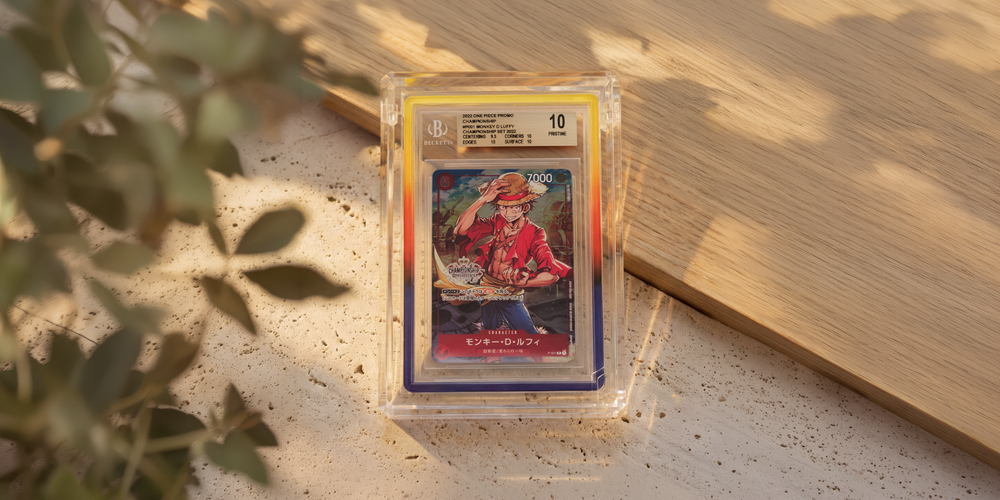
Graded cards are sealed in a protective holder known as a "slab." Beckett describes its current slab as ultrasonically welded to be tamper-proof and water-resistant, with a sealed archival inner sleeve that keeps the card from moving inside without detracting from clarity. BGS inserts a label at the top of the slab that shows:- Overall grade
- Subgrades for centering, corners, edges, and surface
- Card details (year, set, player name, etc.)
- A unique certification number, which can be cross-referenced online for verification
-
Return process
BGS sends the slabbed cards back to the collector via a secure, insured shipping method. Depending on the chosen service level, turnaround can range from a few business days on the fastest tier to a few months on the slowest, and estimates stretch during peak periods.
BGS grading scale and label colors
BGS issues final grades in half-point increments across its 1-to-10 scale, so you will see 8.5s and 9.5s alongside whole grades, a more granular range than some other grading companies offer. The label color on the slab tells you the tier at a glance. As of April 2026, Beckett's published label key has three colors:
-
Black label
- The ultimate prize in BGS grading, reserved for perfect Pristine 10s.
- It denotes a card with a 10 overall and a perfect 10 in all four subgrades (centering, corners, edges, surface).
- Exceptionally rare, and it often commands astronomical premiums on the secondary market.
-
Gold label
- Covers Pristine 10 and Gem Mint 9.5.
- These are the grades most modern-card submitters are chasing, and the gap in resale value between a 9.5 and a 10 can be substantial.
-
Silver label
- Covers all other grades in the current key.
- A silver label is far from a dismissal: vintage cards can carry significant value at mid grades, especially when they are historically relevant or extremely scarce.
If you have seen older BGS slabs with different label styling, go by the printed grade and subgrades rather than the color alone; the key above is Beckett's current published mapping.
Deep dive on each subgrade
Getting a strong final grade hinges on how well a card fares in each sub-category.
-
Centering
- Ideal: Borders should be balanced with no noticeable tilt. The published front-centering standards run 50/50 all around for a Pristine 10, 50/50 one way and 55/45 the other for a Gem Mint 9.5, and 55/45 both ways for a Mint 9, with the back allowed more leeway at each step (60/40 for the top grades, 70/30 at Mint 9).
- Common flaws: Vintage cards often struggle with centering due to older cutting technology, which can result in narrower or wider borders on one side.
- Impact: Heavily off-center cards can plummet by multiple subgrade points.
-
Corners
- Ideal: Crisp, pointed corners free of whitening or bends.
- Common flaws: Even minor nicks from storage, shipping, or mishandling can degrade corners. Sharpness is also compromised by repeated handling without protective sleeves or toploaders.
- Impact: Corner issues are instantly visible, so they carry significant weight in the grading process.
-
Edges
- Ideal: Smooth edges with no flaking of the card stock or discoloration.
- Common flaws: Chipping is especially prevalent in cards with colored borders. Minor chipping might reduce an otherwise pristine card to a lower overall score.
- Impact: Edge wear can be subtle yet highly penalizing, especially when combined with corner flaws.
-
Surface
- Ideal: Free of scratches, print lines, roller marks, or ink smears. High gloss with clear images.
- Common flaws: Fingerprints, micro-scratches from contact with rough surfaces, foil peeling (in certain modern sets), or patches of discoloration.
- Impact: Surface defects can be some of the hardest flaws to detect at a casual glance but are often the most punishing once identified under magnified inspection.
Considerations for older cards and special sets
Not all cards are created equal. Collectors of vintage cards, particularly early Magic: The Gathering Alpha or older sports issues, face unique challenges:
- Alpha MTG: Known for their distinctive rounded corners and off-center cuts. BGS graders are aware of such production quirks but still must judge these cards based on consistent standards.
- Vintage sports cards: Many older cards are naturally subjected to wear over decades. Attaining high subgrades for corners and edges can be especially difficult, so even a mid-grade can be highly coveted.
- Surface printing anomalies: In older sets, misprints or factory "errors" occasionally occurred. BGS must distinguish genuine factory defects from post-production damage.
Service levels, fees, and turnaround times
To meet different timelines, BGS offers several service levels; for a detailed step-by-step, see our submission walkthrough.
As of April 2026, Beckett's published per-card rates are: Base at $14.95 without subgrades or $17.95 with all four subgrades, on a 75+ business day turnaround; Standard at $34.95 with a 45 business day estimate; Express at $79.95 at 15 business days; and Priority at $124.95 at 5 business days. Beckett notes that turnaround times are estimates and subject to change, and higher declared values can require higher tiers.
- Rates move: Beckett adjusts pricing and runs promotional periods, so check its grading page for the live schedule before you submit. If you are weighing BGS fees against PSA head to head, our comparison keeps the cost picture side by side.
- Declared value considerations: If your card's estimated worth exceeds certain thresholds, you may be required to opt for a faster (or more expensive) tier to ensure adequate insurance.
- Peak seasons: During hobby booms, often triggered by major sporting events or new game releases, submissions can skyrocket, occasionally leading to delays.
Advantages of choosing BGS
-
Transparent subgrading system
Many collectors appreciate knowing precisely how a card achieved its overall rating. BGS's four subgrades shed light on each aspect, which can be helpful for future collecting strategies. -
Sturdy, tamper-proof holders
BGS slabs are recognized for their robust design: Beckett describes the current case as ultrasonically welded, tamper-proof and water-resistant. This barrier also helps maintain a card's condition over the long term by shielding it from moisture, dust, and physical impacts. -
Respected brand heritage
Buyers worldwide know and trust Beckett. A high BGS grade is frequently equated with strong market credibility, supporting stronger resale potential. -
Potential for higher premiums
In certain segments, especially modern, ultra-rare inserts or autographed rookie cards, a BGS 9.5 or 10 can fetch an exceptional premium. The Black Label in particular is considered a unicorn grade, motivating collectors to pay top dollar.
Display your BGS slabs like they deserve
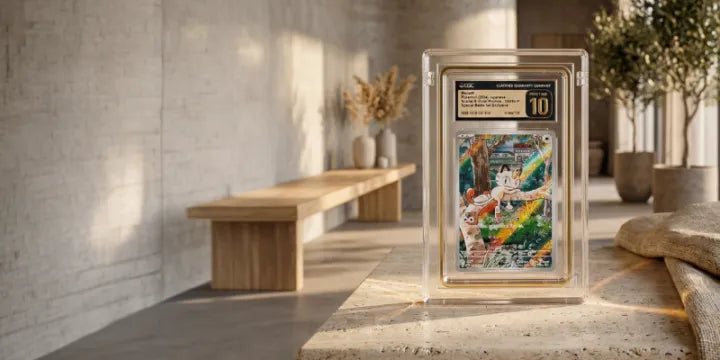
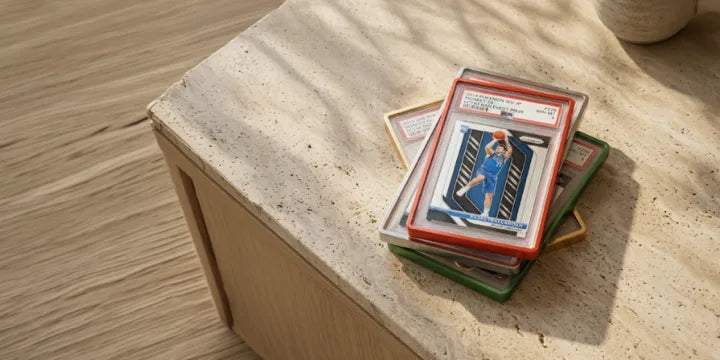
You invested in BGS subgrades for a reason, your cards are premium. Display them that way. Phantom displays feature crystal acrylic construction and a neodymium magnetic closure, sized specifically for BGS slabs. Rated 4.7/5 for design by collectors. Browse our trading card displays.
UltraComparing display options? Our display case breakdown covers every option by slab type, price, and UV protection.
Drawbacks and caveats
-
Overall cost
While BGS provides top-tier service, it may prove pricey for those seeking to grade a large quantity of lower-value cards. Balancing potential card values against grading fees is crucial. -
Turnaround variability
Though BGS cites estimates, unexpected surges in submissions can delay results. Collectors seeking extremely quick turnarounds might have to pay premium rates or consider alternative grading companies during peak periods. -
Competitive market
PSA, another leading grader, often dominates certain hobby niches, particularly vintage baseball or older sports markets. Those markets sometimes prefer PSA-labeled slabs for historical reasons or perceived premium resale. -
Potential subjectivity
Grading, while systematic, still involves human oversight. Different graders may perceive certain flaws differently, although BGS strives for internal consistency and cross-checking.
Maximizing your BGS submission
To optimize outcomes and reduce grading surprises:
-
Pre-screen your cards
Use a magnifying lamp or loupe and carefully examine corners, edges, surface, and centering. Spot any imperfections that might be fixable, like removing dust or superficial fingerprints, before submission. -
Properly sleeve and store
Minimizing damage en route to BGS is essential. Place cards in fresh soft sleeves, then into semi-rigid card holders. For added security, use padded mailers or boxes stuffed with bubble wrap or packing peanuts. -
Research declared values
If your card's value is borderline, weigh the costs: sometimes the difference between a slower or faster tier can significantly affect overall profit if you plan to sell the card quickly. -
Review known trends
Certain sets or card stocks historically grade poorly in specific areas (e.g., foil corners or easily chipped borders). Familiarizing yourself with these tendencies can help set realistic expectations.
Beyond the basic grade: additional BGS services
BGS offers more than just standard grading. Collectors can access:
- Autograph grading: Perfect for cards bearing a signature. BGS authenticates the autograph and grades it on a 5 through 10 scale, with no half-point grades on the autograph side.
- Oversized card grading: Some cards exceed standard sizes, such as box toppers or unique promotional items. BGS provides special holders to accommodate larger dimensions.
- Re-holdering and label correction: If a slab gets damaged or you notice a label misprint, BGS can replace the holder or fix any typographical errors.
- Graded card review: Submissions where you suspect a card may warrant a higher grade on re-examination. BGS checks the card again under the same scrutiny.
Comparing BGS to other graders
While BGS is a dominant name, collectors might also consider PSA or CGC for certain card categories. On raw 2025 volume the gap is real: Beckett graded more than 824,000 cards last year, per GemRate figures reported by collectibles outlet cllct, while PSA and CGC each graded millions. For a head-to-head breakdown, see our BGS vs PSA comparison.
-
PSA (our PSA grading guide covers it in depth)
- Advantages: The 2025 volume leader, with 19.26 million cards graded, up 26% year over year per GemRate figures reported by cllct. Often commands top dollar for vintage sports cards, with large population reports and significant brand loyalty.
- Disadvantages: Lacks subgrades, can have long wait times, perceived to grade some corners or centering more leniently.
-
CGC
- Advantages: Known for consistent grading, also offers subgrades, with a strong presence in Pokemon and comics. CGC finished second among the majors in 2025 with 4.92 million cards graded, per the same GemRate figures.
- Disadvantages: Newer in the sports space, and many high-end collectors still prefer BGS or PSA.
Ultimately, choice of grader depends on the type of card (vintage vs. modern, sports vs. TCGs), the fees you can justify, desired turnaround, and which label is most valued in your collecting community.
Frequently asked questions
What is a BGS Black Label 10?
A Black Label is a BGS 10 where all four subgrades (centering, corners, edges, surface) are a perfect 10. Beckett's label key reserves the black label for these perfect Pristine 10s, and it is the rarest BGS grade.
What do the BGS label colors mean?
As of April 2026, Beckett's published label key is: black for perfect Pristine 10s, gold for Pristine 10 and Gem Mint 9.5, and silver for all other grades.
Does BGS grade Pokemon and sports cards?
Yes. BGS grades trading cards across sports, Pokemon and other collectible categories.
How long does BGS grading take?
Turnaround depends on the service level you choose; higher tiers return faster for a higher fee. As of April 2026, Beckett's estimates ran from 5 business days on Priority to 75+ business days on Base.
Conclusion
For collectors and investors, BGS grading is more than a mere formality; it's an essential step that can profoundly affect a card's authentication, preservation, and market appeal. By extensively detailing flaws in centering, corners, edges, and surface, then rendering a final grade, BGS offers an unmatched level of transparency. Their tamper-proof slabs safeguard cards for the long haul, and pairing them with a proper graded card display completes the protection, while their established pedigree reassures prospective buyers.
Whether you're aiming to flip the latest hot rookie card for profit or safeguard a cherished vintage item for your personal collection, BGS grading underscores the value and authenticity of your treasure. By understanding the ins and outs, from submission strategies to subgrade significance, you can confidently engage in the grading process and get the most out of each card in your catalog. In short, when it comes to building trust and standing out in a crowded marketplace, BGS remains a cornerstone institution in the trading card industry.
Put that BGS slab somewhere worthy
A BGS 9.5 or Black Label deserves display space that matches the grade. The Magneto from Phantom Display fits BGS slabs precisely. It pairs a neodymium magnetic closure with up to 99.6% UV protection, built so your investment looks as good in five years as the day it came back from Beckett. Prefer the classic look? See the Ultra. Browse our BGS displays, the full collection, or the PSA lineup.