





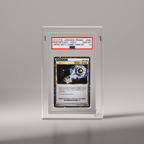
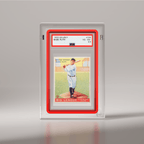







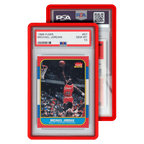
What Is a Graded Card? Raw vs Graded, Explained
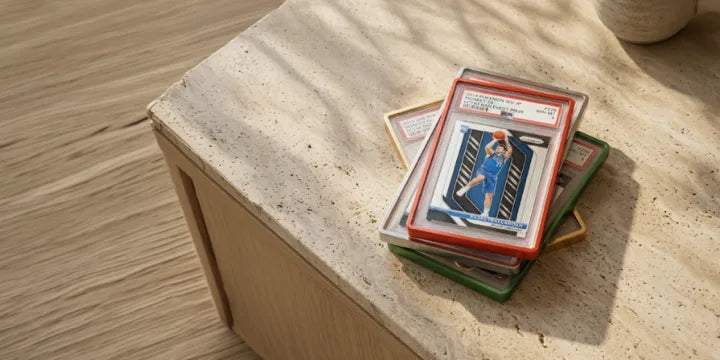
If you have spent any time around collectors, you have seen cards sealed in hard plastic cases with a number on the label, and you have probably wondered what the point is. A graded card is simply a card that an independent company has authenticated, judged for condition, and sealed in a tamper-evident holder with that verdict printed on it. This guide explains what that actually means, how a graded card differs from a raw one, and whether it is worth doing to your own cards.
Raw versus graded
A raw card is any card that has not been graded. Its condition is whatever you say it is, and its authenticity rests on trust between buyer and seller. A graded card removes both question marks. A third party has confirmed the card is genuine, assigned it a condition grade that everyone in the hobby reads the same way, and locked it in a sealed holder so the card that was graded is the card you receive. That shift, from your opinion to an independent verdict, is the entire value of grading.
How grading works
You send a card to a grading company, which first authenticates it to rule out fakes and alterations. Graders then judge the card on the same handful of factors, chiefly centering, corners, edges and surface, and translate that into a single grade on a ten-point scale, where the top of the scale is a near-flawless Gem Mint. Finally the card is encapsulated in a sealed, labelled holder that collectors call a slab. The grade and the seal travel with the card from then on.
Why it matters
Grading solves four problems at once. It proves a card is authentic in a market with a real counterfeit problem, it gives condition an objective and comparable score, it makes a card far easier to sell because buyers trust the grade, and it physically protects the card inside a rigid case. A high grade on a desirable card can lift its value well beyond the raw version, which is why serious cards are so often graded before they change hands.
Who does the grading
A handful of companies dominate: PSA, BGS, CGC, SGC and the newer technology-led grader TAG. Each has its own reputation, turnaround and following, and the right choice depends on the card and your goals rather than a single best answer. If you are weighing them up, our comparison of the main graders is a useful next read.
Is grading worth it
Grading is not free and it is not instant, so it is not for every card. It makes sense when a card is genuinely valuable, when you are confident it will grade well, or when authenticity and resale liquidity matter to you. It rarely makes sense for bulk commons, where the fee can exceed what the card is worth even with a perfect grade. A useful habit is to assess a card honestly first, and only grade the ones where the grade will clearly pay for itself.
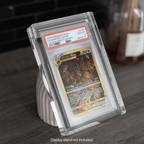
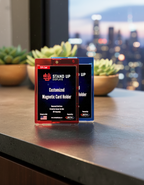
Whatever you decide, a graded card is an investment in condition, and the slab that comes back deserves to be seen rather than stacked in a box. Our displays are sized per grading company, so the fit is precise for PSA, BGS, CGC, SGC and TAG slab dimensions rather than a loose compromise, and each full-size display uses a neodymium magnetic closure with up to 99.6% UV protection on the acrylic. Grade the card that earns it, then give the slab a home with our displays.