


How to Clean Trading Cards Without Ruining Them
Cleaning a trading card is one of the most tempting and most dangerous things a collector can do. A little grime on a card you love feels like an easy fix, but the wrong method can strip the gloss, leave permanent marks, and turn a valuable card into a flagged one. The honest rule is that less is almost always more. This guide covers what is genuinely safe, what will quietly ruin a card, and why the best answer is usually to not clean at all.
Understand the risk before you touch anything
A card surface is a thin printed coating, and most cleaning attacks that coating. Even gentle rubbing can dull the shine unevenly, which is more obvious than the dirt you started with. The bigger issue is value. Grading companies treat evidence of cleaning as alteration, and an altered card is labelled as such rather than given a normal numeric grade, which caps its worth. So on any card you might sell, insure or grade, cleaning is not a neutral act. It is a gamble where the downside is far larger than a bit of surface dust.
What is actually safe
For a card you care about, safe cleaning is almost nothing. A light pass with a clean, dry microfiber cloth to lift loose dust is about as far as you should go, using no pressure and following the card rather than scrubbing across it. A soft, dry brush can flick grit out of the edges before you sleeve it. That is the whole safe toolkit. If loose dust is the only problem, this handles it, and if it is not loose dust, no household trick is going to fix it without risk.
What you should never do
Keep water, spit, alcohol, window cleaner and any other liquid away from cards entirely, because moisture warps stock and clouds the surface. Never reach for erasers, melamine sponges, toothpaste or any mild abrasive, since all of them sand off the finish even when they look like they worked. Skip heat, whether that is a hairdryer or a sunny windowsill, and never try to iron a bend out of a card. Every one of these leaves traces a trained grader can see, and most leave damage you will see yourself within a week.
Sticky residue, tape and stuck cards
The hardest cases, old tape, a price sticker, two cards fused together, are exactly the ones where amateur cleaning does the most harm. Pulling tape lifts the surface with it, and forcing stuck cards apart tears both. If the card is worth real money, this is a job for a professional conservator, not a kitchen experiment. If it is not worth much, accept the flaw as part of the card rather than trading a small blemish for a destroyed surface.
The better move is prevention
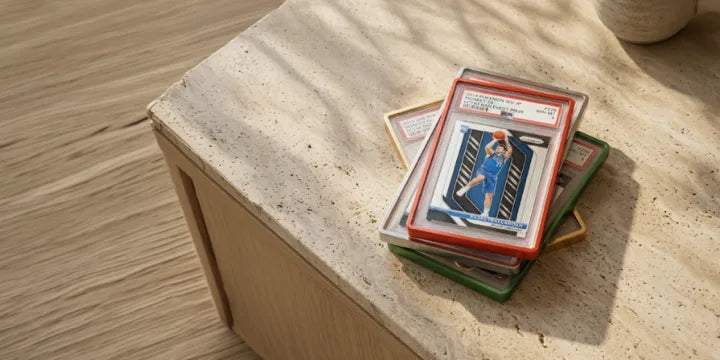
Almost every cleaning problem starts as a storage problem. A card that is sleeved, handled by the edges and kept somewhere cool, dark and dry simply never gets dirty enough to need cleaning. Put the money and effort you would spend on cleaning products into good sleeves and holders instead, and the question disappears. Our protectors cover the sleeves and holders that keep a card clean in the first place.
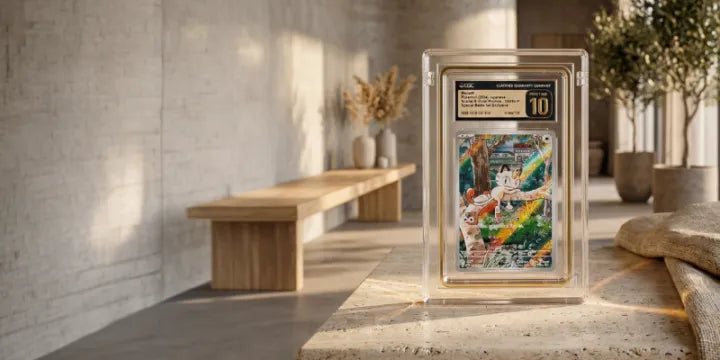
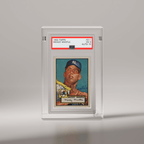
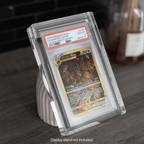
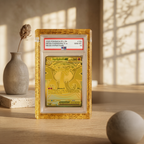
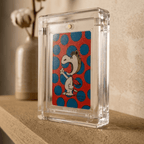
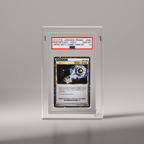
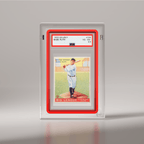
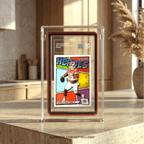
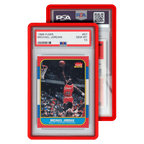
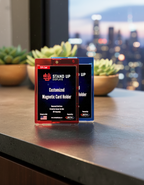
For the cards that already deserve better than a shoebox, protection and presentation matter more than any cleaning trick. A graded slab or a valued raw card belongs somewhere sealed and stable, not under a cloth and a bottle of solvent. Our displays are sized per grading company, so the fit is precise for PSA, BGS, CGC, SGC and TAG slab dimensions rather than a loose compromise, and each full-size display uses a neodymium magnetic closure with up to 99.6% UV protection on the acrylic. Keep the card clean by keeping it protected, and let the displays do the rest.