












SGC Card Grading Explained: Costs, History and Who It Suits
SGC has long been one of the four grading companies serious collectors actually weigh up, and if you focus on vintage cards you have almost certainly seen its black-cored slabs in auction listings. This guide explains what SGC is, where it came from, what it costs to send a card in, and how it stacks up against PSA, BGS, CGC and TAG. Where the public record is thin we say so rather than guess, and the prices below are the live figures we confirmed on SGC's own pricing page, not numbers copied from an unverifiable page.
Who SGC is and where it fits
SGC is one of the older names in the hobby, founded in 1998, and it built its name as the grader of choice for vintage cardboard. Independent collectibles press has reported that it cultivated a loyal following, especially among vintage collectors, and that reputation still anchors the brand today.
The bigger recent story is ownership. In 2024, Collectors, the parent company of PSA, acquired SGC, which now sits in the same ownership group as PSA and Goldin Auctions. At the time the deal was framed as SGC continuing to operate independently, keeping its own brand rather than folding into PSA. That is worth remembering: SGC and PSA now share a corporate owner, even though they grade as separate companies.
How SGC grades and what its slabs look like
SGC grades on the same familiar ten-point scale collectors already know from PSA and the others, so an SGC-graded card reads the same way at a glance. What sets it apart is presentation. Its signature slab uses a black inner core that frames the card, a look that has become closely tied to vintage and that many collectors prefer for older, lower-population cards. For exact scale definitions and the current sub-grade language, check SGC's own site, since those details are rendered in a way that is hard to quote reliably from the outside.
What SGC costs and how long it takes
Here is SGC's live standard-size pricing, as of July 2026, taken from its services page. The entry tier is $15 per card for cards with a declared value up to $1,500, on SGC's standard turnaround of roughly 40 to 50 business days. The next step up is $85 for cards up to $3,500. Above that declared value, SGC routes you to its faster lane: expedited grading at a 2 to 3 business day turnaround runs $150 up to $3,500, $250 up to $7,500, and climbs from there, topping out at $3,750 for cards valued over $100,000, with $375 added for each additional $10,000 of value. Reholdering a damaged SGC slab starts at $15. One practical note: SGC's clock only starts once your order is unboxed and logged into its system, so the quoted business days begin after intake, not the day you post it.
How SGC compares to PSA, BGS, CGC and TAG
By raw volume, SGC is the smallest of the long-established majors. Independent tracking from GemRate, reported by collectibles outlet cllct, put SGC at 1.42 million cards graded in 2025, a fraction of PSA's output and behind Beckett and CGC too, though ahead of newcomer TAG. Numbers are not the whole story. SGC's niche is vintage, where its black slab and long track record carry real weight, and for pre-war and mid-century cardboard it remains a genuine alternative rather than an afterthought. If you are weighing the majors head to head, our comparison of the main graders is a useful next read.
Who should and should not use SGC
SGC makes the most sense if you collect vintage, want a respected grade at a lower entry price than some rivals, and like the look of the black slab in a display. It is also a reasonable pick for straightforward raw submissions where you are comfortable with a multi-week standard turnaround. It is a weaker fit if your priority is the deepest possible resale market for modern cards, where PSA's scale still leads, or if you need a guaranteed fast result, since SGC reserves its quickest turnaround for higher-value tiers. As always, confirm current pricing and turnaround on SGC's site before you submit, because grading companies change both often.
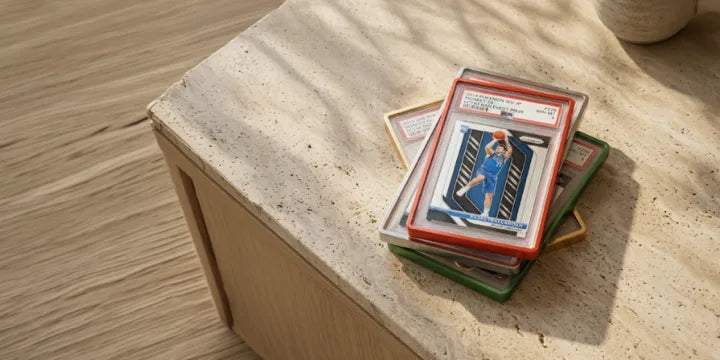
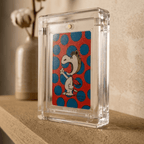
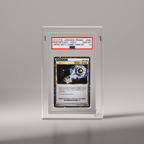
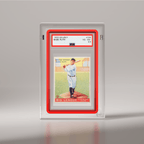
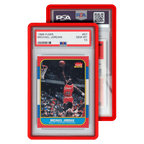
Whichever grader you choose, the slab that comes back is worth protecting. A graded card is a bet on condition, so it deserves better than a shoebox. Our displays are sized per grading company, so the fit is precise for SGC, PSA, BGS, CGC and TAG slab dimensions rather than a loose compromise, and each full-size display uses a neodymium magnetic closure with up to 99.6% UV protection on the acrylic. Grade the card, then give it a home worthy of the grade. Browse our displays to find the exact fit.